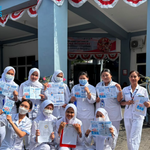
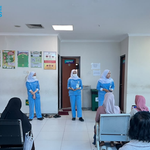
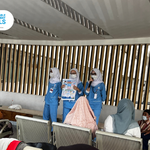
NERS NEWS — Group 4 of the Emergency and Critical Care rotation from the Nursing Profession Program, Faculty of Nursing, Universitas Airlangga, conducted a Hospital Health Promotion (PKRS) activity in the operating room waiting area with the theme “Early Mobilization After Anesthesia.” The activity aimed to improve patients’ families’ understanding of the importance of gradual mobilization after surgery under anesthesia to accelerate recovery and prevent postoperative complications or other complaints.
Throughout the session, the presenters delivered the material clearly and in an easy-to-understand manner. The topics covered included the definition of early mobilization after anesthesia, its goals and benefits, safe stages of mobilization according to the patient’s condition, and the role of family members in assisting patients with early mobilization. The presenters also explained that early mobilization helps stimulate bowel function, improve blood circulation to reduce dizziness when getting out of bed, relieve back and lower back discomfort, and restore normal bladder muscle function.
Participants were enthusiastic and actively engaged throughout the education session. Several participants asked questions regarding the family’s role in assisting with early mobilization, including which areas could safely receive gentle massage after surgery, when patients could begin drinking fluids after surgery, and the use of deep breathing exercises following anesthesia. All questions were answered thoroughly by the presenters, allowing participants to gain a better understanding of the importance of early mobilization, particularly the actions family members can take to support patients after anesthesia. Through this PKRS activity, it is expected that patients and their families will be able to practice early mobilization safely according to healthcare professionals’ recommendations to support optimal postoperative recovery.
Writer: Alina Ramadani