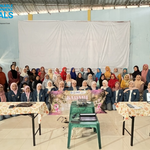
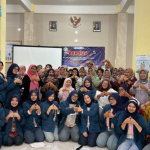
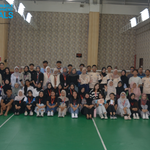
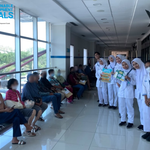
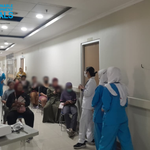
NERS NEWS — Professional Nursing students from Group 3, Wave 3, Faculty of Nursing, Universitas Airlangga, successfully conducted a Group Activity Therapy (TAK) session featuring a custom-engineered “Human Snakes and Ladders” game. The interactive program fostered a unique cross-block collaboration, uniting elderly residents from Block A, Block B, and Block C at UPTD Griya Werdha. This initiative served as a dynamic medium for physical, cognitive, social, and emotional stimulation through a joyful, highly interactive format tailored to the needs of late-adult populations.
Older adults undergo a multitude of physical, psychological, and social transitions. These changes frequently lead to a decline in daily activity, restricted social networks, and feelings of monotony or boredom within institutional care environments. Consequently, structured interventions are essential to empower the elderly to remain active, encourage meaningful social participation, and preserve their overall quality of life.
As a pivotal promotive and preventive measure within gerontic nursing care, the Unair Professional Nursing student team introduced the “Human Snakes and Ladders” therapeutic game. The primary objective was to deliver a recreational yet therapeutic experience that strengthens focus, memory, and communication, while simultaneously reinforcing a sense of community and solidarity among the residents.
The group therapy seamlessly brought together residents from Blocks A, B, and C of the UPTD Griya Werdha facility. The elderly participants engaged in a modified version of the classic board game, where they physically acted as the moving game pieces on a large, floor-mapped grid. Each square on the giant board contained simple challenges, light physical tasks, or cognitive questions meticulously designed to trigger reminiscence, stimulate reasoning, and accelerate positive peer interaction.
The session kicked off with warm greetings, group introductions, and a clear breakdown of the game rules. The students provided structured guidance to ensure that all residents could move across the grid safely and comfortably. Subsequently, the elderly participants took turns navigating the game board under the close monitoring and encouraging companionship of the nursing students.
Beyond serving as pure entertainment, the human snakes and ladders game functioned as a structural tool to train memory retention, foster decision-making skills, practice following sequential instructions, and stimulate social dialogue. This multi-sensory exercise effectively supports the elderly in maintaining both physical mobility and neuro-cognitive health.
The residents displayed profound enthusiasm throughout the entire program. Expectant participants from the different residential blocks cheered each other on, celebrated group achievements, and immersed themselves in the shared atmosphere. The social bonding experienced during the activity offered the elderly an excellent opportunity to expand their peer relationships and counter institutional isolation.
Through this innovative group therapy model, it is envisioned that the elderly residents at UPTD Griya Werdha can actively sustain their cognitive reserve, improve baseline physical movement, and experience enhanced life satisfaction. This program stands as a concrete reflection of the nursing students’ capacity to deliver creative, evidence-based, and compassionate geriatric interventions.
Integrated Sustainable Development Goals (SDGs):
- SDG 3: Good Health and Well-Being: Elevating the holistic health outcomes of the elderly by offering structured physical, cognitive, and psychosocial stimulation that promotes active aging and prevents emotional burnout.
- SDG 4: Quality Education: Supporting interactive, informal health and cognitive literacy for vulnerable populations through a game framework that exercises recall, active listening, and social communication.
By executing the “Human Snakes and Ladders” cross-block collaborative therapy at UPTD Griya Werdha, the students continue to champion the vision of keeping the senior community active, healthy, and fulfilled. This project manifests the definitive role of the Faculty of Nursing, Universitas Airlangga, in pioneering innovative, scientifically sound, and deeply humanizing models of public gerontic care.
Author: Adim Hidayat (Group 3 / Wave 3)
Editor: Farah Dina Azizatul Aulia (Airlangga Nursing Journalist)