
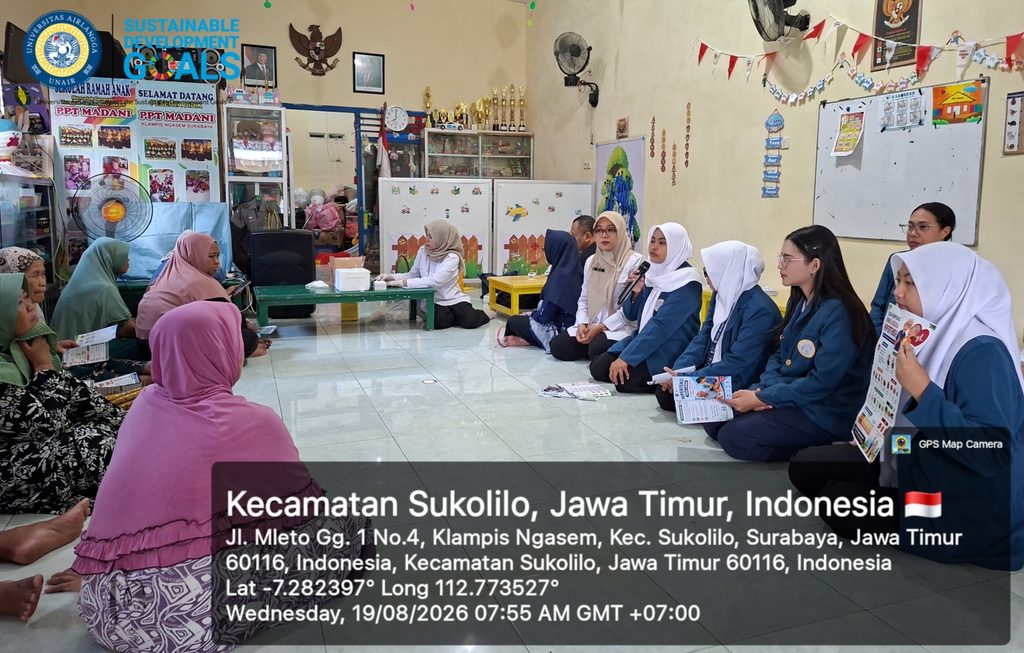
NERS NEWS — In an effort to reduce the incidence of non-communicable diseases and improve the quality of life of the elderly, students of the Nursing Education Study Program, Faculty of Nursing, Universitas Airlangga, in collaboration with Klampis Ngasem Community Health Center, successfully held a Community Health Education (PKRS) activity entitled “Hypertension in the Elderly: Control Blood Pressure, Enjoy Old Age.” The interactive event, which took place on Wednesday, August 19, 2026, at RW 06 Klampis Ngasem Hall, was attended by dozens of local elderly residents who enthusiastically participated in every stage of the education and health examination.
In an effort to reduce the prevalence of non-communicable diseases (NCDs) and optimize the health status of the elderly population, a Hospital Health Promotion (PKRS) activity entitled “Hypertension in the Elderly: Control Blood Pressure, Enjoy Old Age” was conducted. This integrated educational activity was held on Wednesday, August 19, 2026, at RW 06 Klampis Ngasem Hall, involving the active participation of the elderly community in a series of promotive and preventive interventions.
The educational intervention began with participant preparation and the delivery of scientific material on the pathophysiology and clinical management of hypertension. The presentation focused on the characteristics of hypertension as an asymptomatic condition (silent killer), in which persistent increases in arterial vascular pressure carry a high risk of causing target organ damage. The fundamental vascular complications presented included the incidence of cerebrovascular accident (stroke), acute myocardial infarction, congestive heart failure, and hypertensive nephropathy.
Referring to the clinical criteria of the American Heart Association (AHA) and World Health Organization (WHO), hypertension is defined when the systolic blood pressure is ≥ 140 mmHg and/or the diastolic blood pressure is ≥ 90 mmHg. To mitigate the risk of disease progression, non-pharmacological management strategies were introduced through a sustainable lifestyle intervention framework, namely the CERDIK strategy (regular health checks, eliminating cigarette smoke exposure, regular physical activity, a balanced diet, adequate rest, and stress management). From the aspect of medical nutrition therapy, emphasis was placed on limiting daily sodium intake (< 2 grams/day or equivalent to 1 teaspoon of salt) and increasing the consumption of foods high in physiological cations (potassium and magnesium) to support hemodynamic regulation.
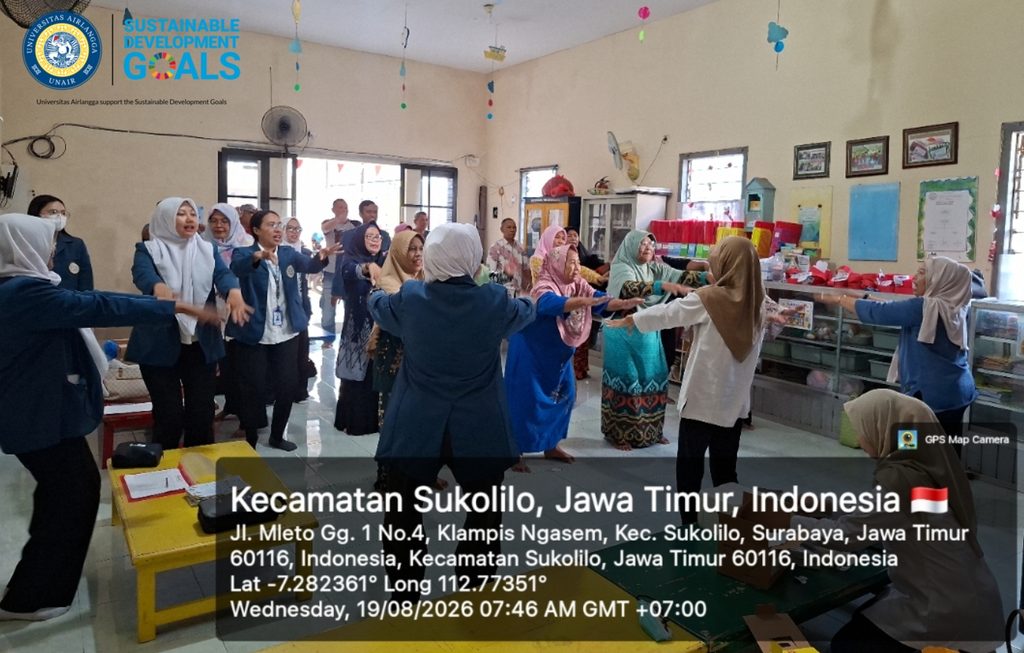
The delivery of the educational intervention was supported by the use of evidence-based instructional media in the form of a structured leaflet to facilitate information retention. Process and outcome evaluations showed a satisfactory level of community participation, as indicated by the achievement of the minimum target quorum and the high responsiveness of participants during interactive discussions and post-education comprehension evaluations.
The entire series of community intervention activities was carried out in accordance with standard operating procedures for community nursing services and under academic and clinical institutional supervision to ensure the quality and validity of the educational materials delivered.
The implementation of this community health education intervention substantially contributed to the achievement of the Sustainable Development Goals (SDGs) indicators. Particularly under SDG 3 (Good Health and Well-Being), especially Target 3.4, this activity directly contributed to efforts to reduce premature mortality from non-communicable diseases (NCDs) through strengthening preventive measures and controlling cardiovascular complications among the elderly population. In addition, this program also incorporated the values of SDG 4 (Quality Education) by providing inclusive non-formal health education facilities to sustainably improve community health literacy. The successful implementation of this intervention also reflected the realization of SDG 17 (Partnerships for the Goals), which transformed strategic partnership synergies among nursing higher education institutions, primary healthcare facilities, and local-level stakeholders to achieve holistic community health coverage.
Through the implementation of this health education activity, it is expected that the residents of RW 06 Klampis Ngasem, particularly the elderly population, will have greater awareness and independence in regularly monitoring blood pressure and adopting a healthy lifestyle. The collaboration between the academic community of Universitas Airlangga and Klampis Ngasem Community Health Center is expected to continue sustainably as a tangible form of community service toward realizing healthy, independent, active, and happy elderly people in Indonesia.
Writer: Ahfa Putri Amelia





