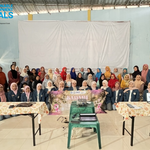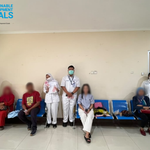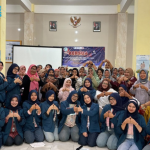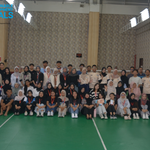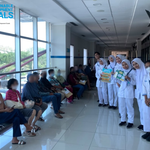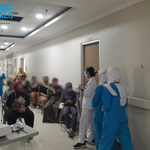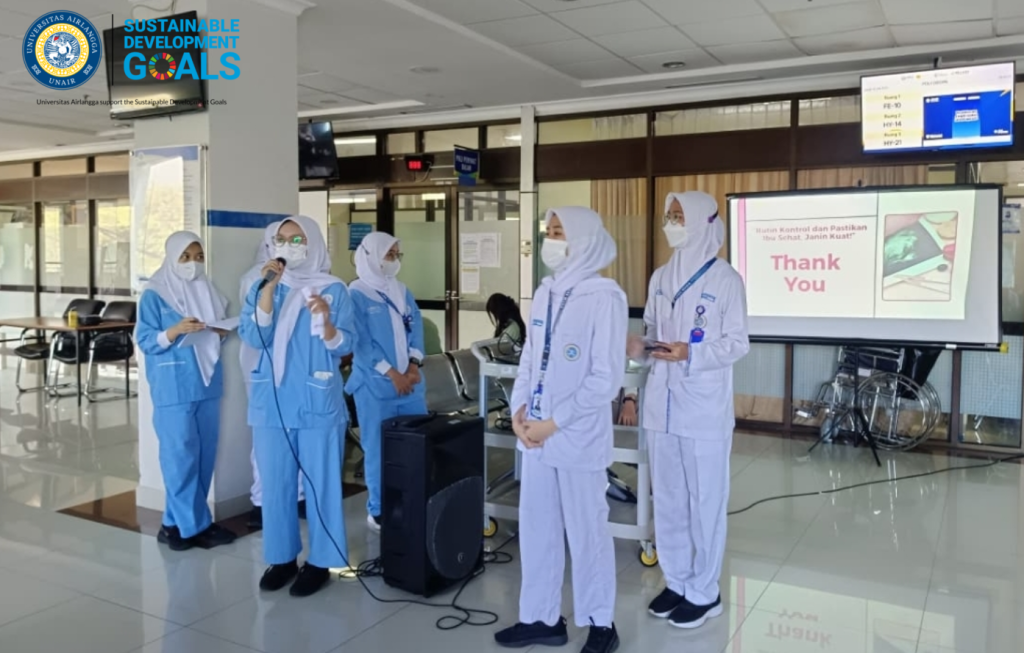
NERS NEWS — Nursing Professional Program students from Universitas Airlangga, Batch B27, Group D1.1, who are currently undertaking their Maternity Nursing clinical rotation, conducted a Hospital Health Promotion (PKRS) activity on Friday (July 10) in the waiting area of the Obstetrics and Gynecology Clinic at Universitas Airlangga Hospital. The program focused on educating pregnant women and their families about Fetal Growth Restriction (FGR), also known as Intrauterine Growth Restriction (IUGR). A total of 13 participants attended the educational session, demonstrating enthusiasm and active participation throughout the activity. The program was supervised by Dr. Mira Triharini, S.Kp., M.Kep., as the academic supervisor, and Anisa Mardiati Imaniar, S.Keb., Bd., as the clinical supervisor.
During the presentation, the students explained that Fetal Growth Restriction (FGR) is a condition in which a fetus does not grow according to its gestational age due to inadequate oxygen and nutrient supply. The educational material covered the definition of FGR, its causes, warning signs and symptoms, potential complications if left untreated, as well as preventive measures and management during pregnancy. Participants were also educated on the importance of regular antenatal care, maintaining a balanced and nutritious diet, taking iron supplements as recommended by healthcare professionals, managing underlying conditions such as hypertension and diabetes, and avoiding exposure to cigarette smoke to support optimal fetal growth.
The session became increasingly interactive during the discussion and question-and-answer segment. One participant asked whether hormonal changes during pregnancy could contribute to the occurrence of Fetal Growth Restriction. Participants also showed great enthusiasm during the short quiz held at the end of the session to evaluate their understanding of the material. They actively answered questions and successfully recalled key information regarding risk factors, warning signs, and preventive measures for FGR.
Overall, the educational program was conducted smoothly and received positive feedback from all participants. Through this activity, it is expected that pregnant women and their families will gain a better understanding of Fetal Growth Restriction, enabling them to recognize risk factors, appreciate the importance of early detection, and implement preventive measures to safeguard maternal and fetal health. This activity also reflects the Nursing Professional students’ role in providing community health education while supporting the achievement of Sustainable Development Goal (SDG) 3: Good Health and Well-Being, through efforts to improve maternal and child health and prevent pregnancy-related complications.
Writer: Alfirizqika Nabila