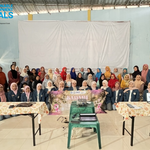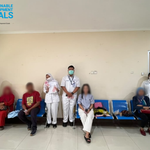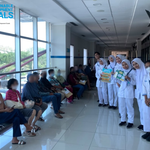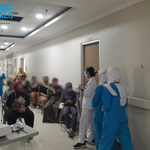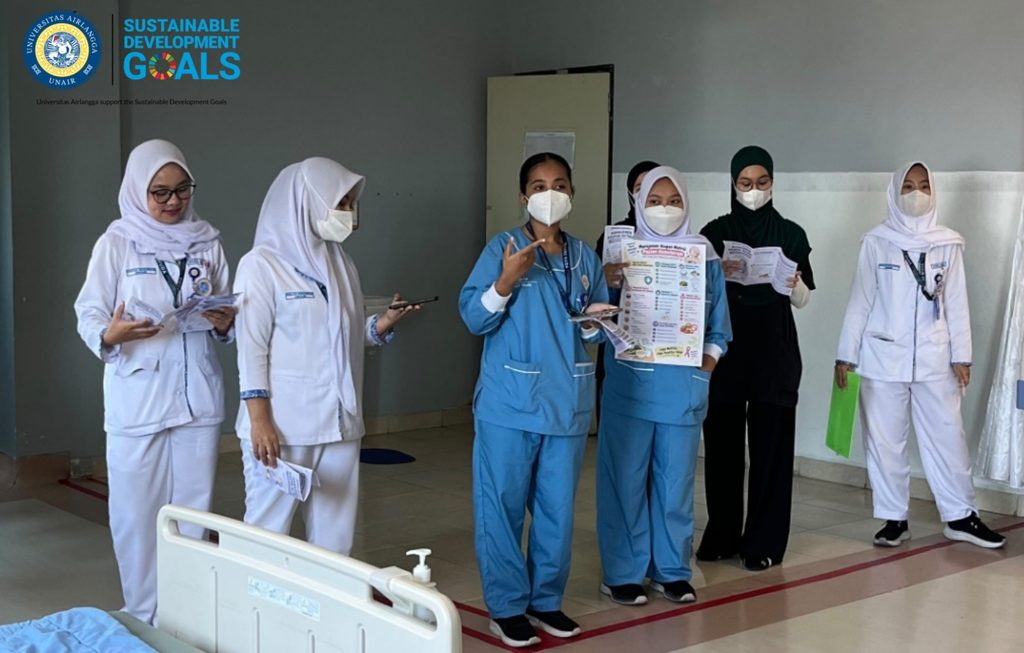
NERS NEWS — Nursing Profession Education Program students of the Faculty of Nursing, Universitas Airlangga, Group 2, Batch 49, conducted a health education activity on “Nutrition Intake Management for Chemotherapy Patients” for patients and their families or accompanying caregivers at the Integrated Oncology Installation (IOT), Universitas Airlangga Hospital, on Friday, September 11, 2026, at 10:00 a.m. The activity was conducted through lectures and question-and-answer sessions using posters and leaflets to increase participants’ knowledge regarding nutritional fulfillment during chemotherapy.
The educational activity discussed nutrition intake management during chemotherapy, including the definition of nutrition, the importance of meeting energy and protein needs, recommended types of food, and dietary adjustments based on chemotherapy side effects such as nausea, vomiting, decreased appetite, changes in taste, mouth sores, diarrhea, and constipation. Participants were also provided with information regarding food safety and hygiene, foods that should be avoided or limited, and the importance of monitoring body weight and appetite during treatment.
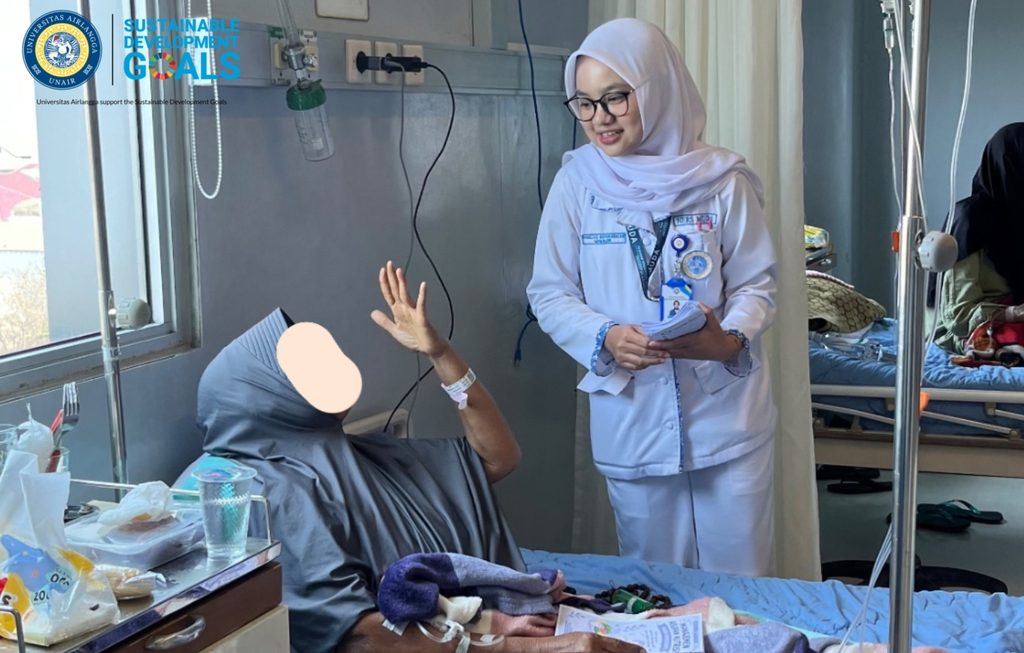
This activity involved Nursing Profession Education Program students of the Faculty of Nursing, Universitas Airlangga, Group 2, Batch 49, as the organizers, with patients and their families or accompanying caregivers at the IOT as the target participants. The material was delivered by Maria Alfonso Apetatu, S.Kep. and Rahmalia Fitri Azizah, S.Kep. The activity took place on Friday, September 11, 2026, at 10:00 a.m. in the waiting room of the Integrated Oncology Installation (IOT), Universitas Airlangga Hospital, accompanied by academic and clinical supervisors.
This education was conducted because chemotherapy can cause various side effects that affect patients’ ability to meet their food and fluid needs, such as nausea, vomiting, decreased appetite, changes in taste, mouth sores, diarrhea, and constipation. These conditions can lead to weight loss, muscle mass loss, energy deficiency, and hinder the body’s recovery process. Through this activity, patients and families are expected to have a better understanding of nutritional fulfillment, be able to choose appropriate foods, implement dietary patterns based on the patient’s condition and tolerance, and maintain food safety and hygiene during treatment.
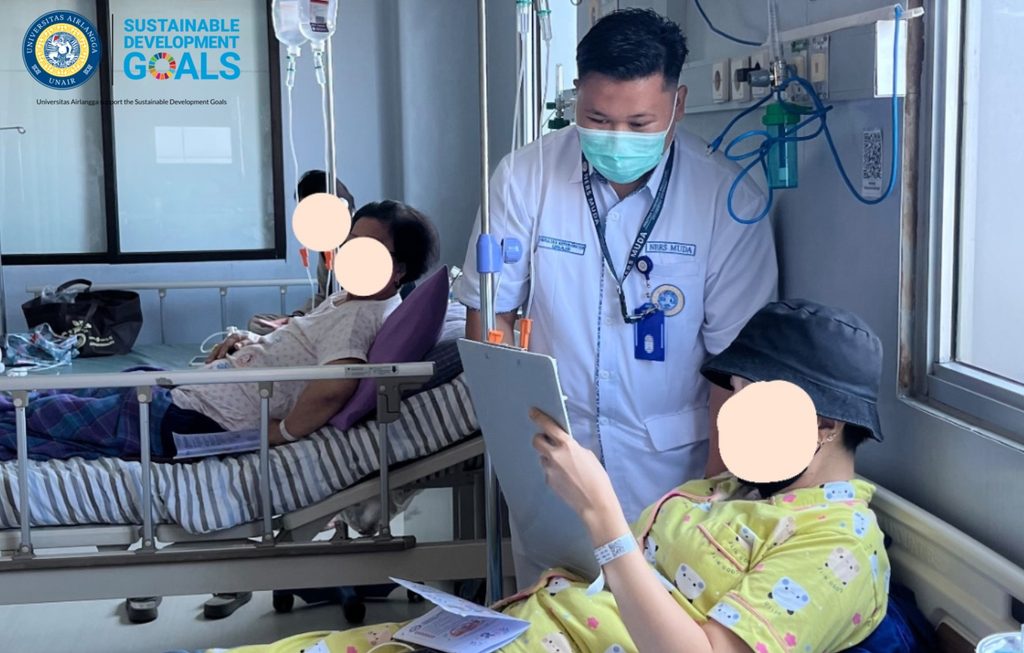
This educational activity also served as a form of contribution by nursing students to increasing public knowledge and awareness of health. Providing information regarding nutritional fulfillment during chemotherapy supports efforts to improve patients’ health and well-being, thereby aligning with Sustainable Development Goal (SDG) 3, namely Good Health and Well-Being.
Through this activity, patients and families are expected to be able to apply the information obtained in their daily lives according to their condition and the recommendations of healthcare professionals. Similar health education activities are expected to continue to be developed as a form of contribution by the Faculty of Nursing, Universitas Airlangga, in providing benefits to the community, improving the quality of nursing education and practice, and supporting the achievement of sustainable development goals in the health sector.
Writer: Riyantania Anugrahanti