
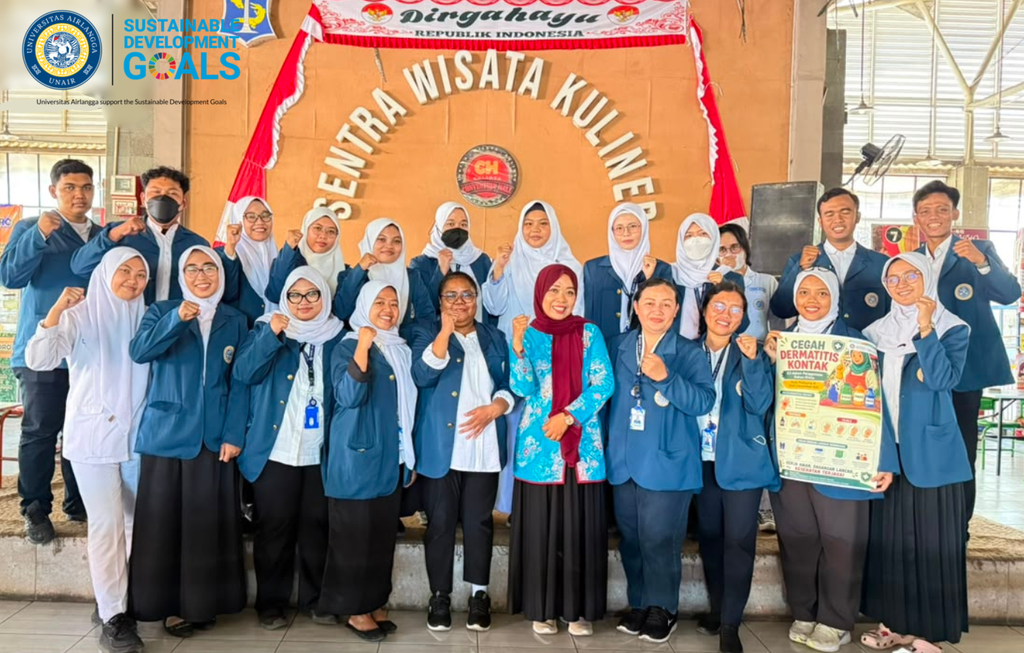
NERS NEWS — Nursing Profession students from Universitas Airlangga conducted a health education session entitled “Preventing Contact Dermatitis: Occupational Safety and Health in Chemical Use among Vendors at Sentra Wisata Kuliner (SWK) Convention Hall” at SWK Convention Hall, Surabaya. The activity aimed to increase vendors’ knowledge and awareness of Occupational Safety and Health (OSH), particularly regarding the use of chemicals that may cause contact dermatitis. The education was intended to help vendors identify risk factors, signs and symptoms of contact dermatitis, and apply preventive measures and skin protection while working.
The health education session focused on increasing vendors’ understanding of the importance of implementing OSH in their daily activities. As informal-sector workers, vendors face various potential hazards in the workplace, including sharp objects, hot oil, gas stoves, electrical equipment, and exposure to chemicals from detergents, dishwashing soap, cleaning solutions, and disinfectants.
One health problem that may arise from repeated chemical exposure is contact dermatitis, particularly on frequently exposed areas such as the hands. Repeated contact with water and cleaning agents, also known as wet work, can increase the risk of skin irritation. Contact dermatitis may be characterized by redness, itching, dry and cracked skin, stinging or burning sensations, swelling, and, in certain conditions, blisters.
The educational material also covered various risk factors for contact dermatitis, types of substances that may cause irritation, and the importance of recognizing signs and symptoms at an early stage. Participants were informed that prevention can be achieved by using cleaning products according to instructions, avoiding direct contact with chemicals, wearing appropriate gloves, rinsing and drying hands properly, and maintaining skin moisture.
The activity was facilitated by Nursing Profession students from Universitas Airlangga and supervised by Mus’adah, S.Kep., Ns., M.Kes., as the academic supervisor. The material was delivered through an interactive session and discussion, allowing participants to share their experiences and concerns related to their work activities and the use of cleaning products.
Throughout the activity, participants showed enthusiasm by actively following the session and discussing safe ways to use cleaning products, selecting appropriate gloves, and managing skin complaints that may arise. The interaction highlighted the importance of practical and easy-to-implement OSH education in vendors’ daily activities.
One participant shared that the session provided new insight into the importance of protecting the hands when using cleaning products. “After receiving the education, I better understand that using cleaning products every day can also affect skin health. I will be more careful and use protective equipment when washing or cleaning utensils,” the participant said.
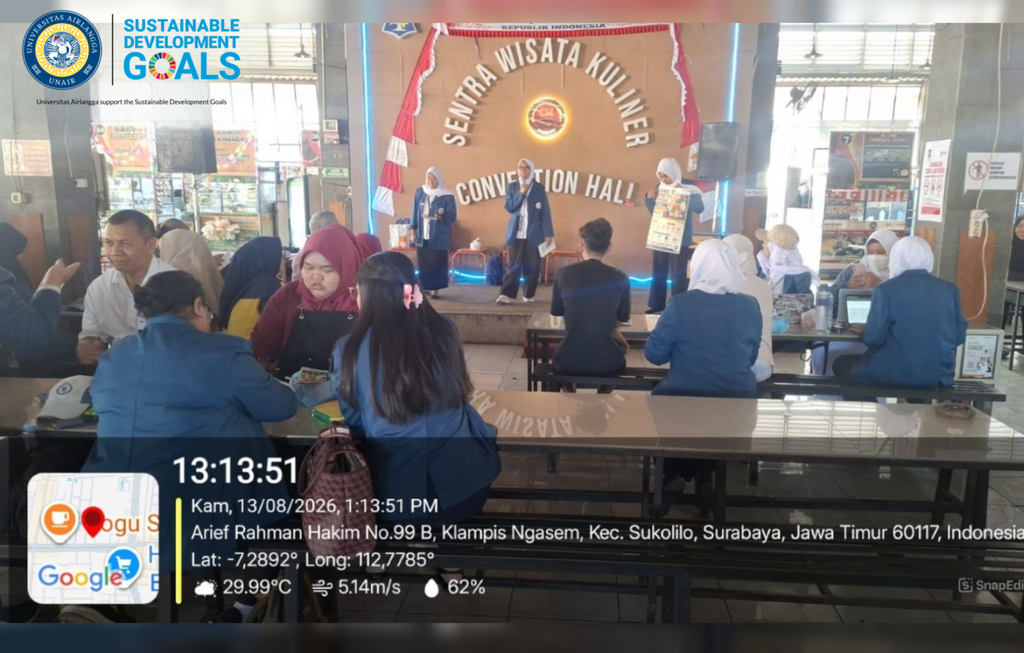
The activity supported several Sustainable Development Goals (SDGs), including:
SDG 3: Good Health and Well-Being
The health education contributed to improving vendors’ health and well-being by providing information on the prevention of occupational diseases, particularly contact dermatitis. Increased knowledge about chemical hazards and the implementation of OSH is expected to encourage safer work practices and reduce the risk of work-related health problems.
SDG 4: Quality Education
The session served as a form of community-based health education by providing information about OSH and contact dermatitis prevention. The education is expected to improve vendors’ ability to recognize health risks in the workplace and independently apply the knowledge in their daily activities.
SDG 8: Decent Work and Economic Growth
The implementation of OSH in the informal sector contributes to creating safer and healthier working environments. By maintaining workers’ health and reducing the risk of occupational diseases, vendors can carry out their economic activities more effectively and sustainably.
Through the “Preventing Contact Dermatitis: Occupational Safety and Health in Chemical Use among Vendors at Sentra Wisata Kuliner (SWK) Convention Hall” session, vendors were expected to gain a better understanding of the importance of occupational safety and health in their daily work. Simple preventive measures, such as using chemicals according to instructions, wearing appropriate gloves, maintaining skin cleanliness and moisture, and recognizing early symptoms of contact dermatitis, are expected to minimize the risk of occupational diseases. Continuous OSH education can also contribute to creating a healthier, safer, and more productive working environment for informal-sector workers.
Writer: Adinda Safitri





