
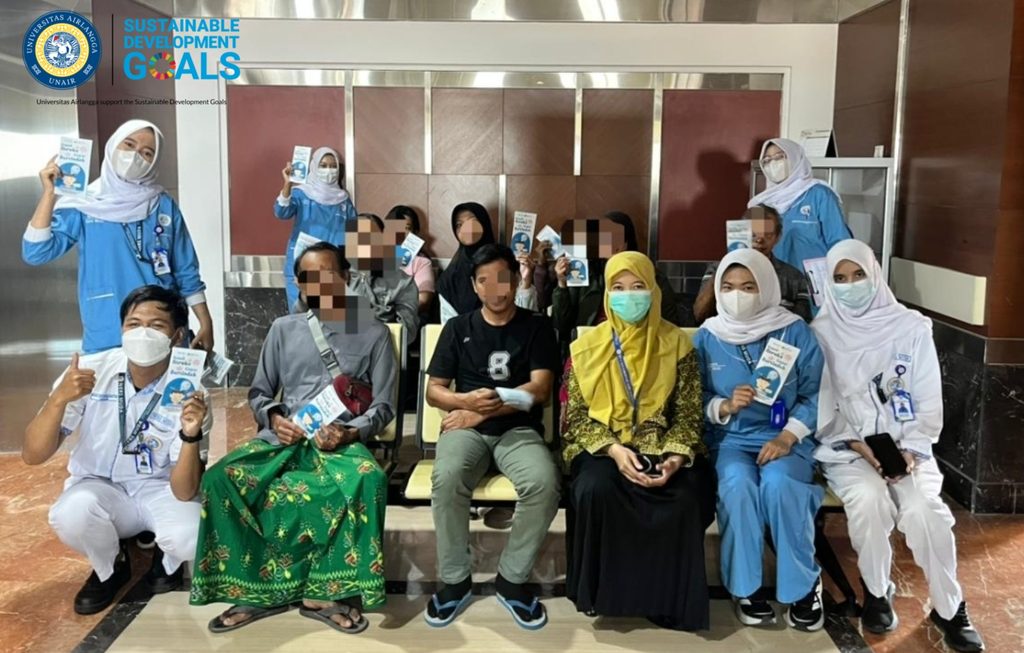
NERS NEWS — Students of the Nursing Professional Education Program, Group 8, Cohort 49, Faculty of Nursing, Universitas Airlangga, conducted a Hospital Health Education (PKRS) activity as part of the Medical-Surgical Nursing Rotation on Thursday, August 27, 2026. Beginning at 10:00 a.m. WIB, the activity carried the theme “Recognize Stroke Immediately” and targeted patients and their families in IRNA 7A Graha Trimed, Universitas Airlangga Hospital. The activity was conducted by students of the Nursing Professional Practice Program, Faculty of Nursing, Universitas Airlangga.
The topic of stroke was selected due to the importance of increasing patients’ and families’ knowledge in recognizing the early signs and symptoms of stroke and understanding the actions that should be taken immediately when a stroke occurs. Stroke is a neurological disorder caused by a sudden disruption of blood flow to the brain. This disruption can result in ischemia or hypoxia in brain tissue and may lead to permanent brain damage if treatment is not provided promptly.
Before the activity, the students prepared a Health Education Activity Plan (SAP), coordinated with academic and clinical supervisors, and prepared educational media in the form of PowerPoint presentations and leaflets. Based on the SAP, the methods used during the activity included lectures and question-and-answer sessions. These media were used to help participants understand stroke-related information more easily and systematically.
The activity began with an opening session consisting of greetings, introductions of the group members, an explanation of the allotted time, the objectives of the education session, and an overview of the activity. The presenters then explored participants’ prior knowledge and experiences regarding stroke before delivering the educational material. The material covered the definition of stroke, its causes and types, signs and symptoms, risk factors, medical management, prevention, and the appropriate actions to take when a stroke occurs.
During the education session, participants were introduced to the slogan “SeGeRa Ke RS” to help them recognize the signs and symptoms of stroke. Participants were taught to recognize Senyum tidak simetris (an asymmetrical smile), in which the mouth appears to droop to one side or the person has difficulty swallowing; Gerak separuh anggota tubuh melemah (weakness of one side of the body), such as sudden weakness, numbness, or inability to move an arm or leg on one side of the body; Bicara cadel (slurred speech), in which speech becomes unclear or incoherent, or the person has difficulty speaking or understanding speech; Kebas atau kesemutan (numbness or tingling) that suddenly occurs on one side of the face or body; Rabun (visual disturbance), involving sudden changes in vision; and Sakit kepala hebat (severe headache) that occurs suddenly and is extremely intense, potentially accompanied by balance problems or vertigo.
The material then continued with stroke prevention through the slogan “CERDIK,” which stands for Cek kesehatan secara berkala (regular health check-ups), Enyahkan asap rokok (eliminate cigarette smoke), Rajin aktivitas fisik (engage in regular physical activity), Diet seimbang (maintain a balanced diet), Istirahat cukup (get adequate rest), and Kelola stres (manage stress). Participants were informed that adopting healthy habits, such as regularly checking blood pressure, blood glucose, and cholesterol levels, avoiding smoking, engaging in regular physical activity, consuming a balanced and nutritious diet, getting sufficient rest, and managing stress can help maintain healthy blood vessels and reduce the risk of stroke.
Participants were also educated about the importance of receiving prompt treatment for stroke. Stroke management is associated with the golden period, referring to the critical 4.5-hour window from the onset of the first symptoms until the patient receives medical treatment at a hospital. Therefore, when signs and symptoms of stroke are identified, participants were advised to immediately call an ambulance or take the patient to the nearest healthcare facility. Participants were also reminded not to give the patient food or drinks until it has been confirmed that the patient is conscious and does not have difficulty swallowing, as this may cause choking and airway obstruction.
After the presentation, the activity continued with a discussion and question-and-answer session. Participants were given the opportunity to ask questions about material they did not fully understand and discuss the topic with the presenters. At the final stage, participants’ understanding was evaluated through several questions regarding the material presented. Participants were expected to be able to identify at least three signs and symptoms of stroke, explain the definition of stroke in simple terms, identify the prevention steps represented by CERDIK, and explain the initial actions that should be taken when a stroke occurs based on the SeGeRa Ke RS principle.
Through this PKRS activity, the students hope that patients and their families will increase their knowledge about stroke, become able to recognize its signs and symptoms at an early stage, and understand the importance of seeking immediate medical assistance. Participants are also expected to be able to implement stroke prevention measures through healthy lifestyle behaviors and know the appropriate actions to take when encountering someone experiencing stroke symptoms. With increased knowledge, patients and their families are expected to play an active role in preventing delays in treatment and supporting efforts to improve health and quality of life.
Writer: Aura Nirmala Sari





