
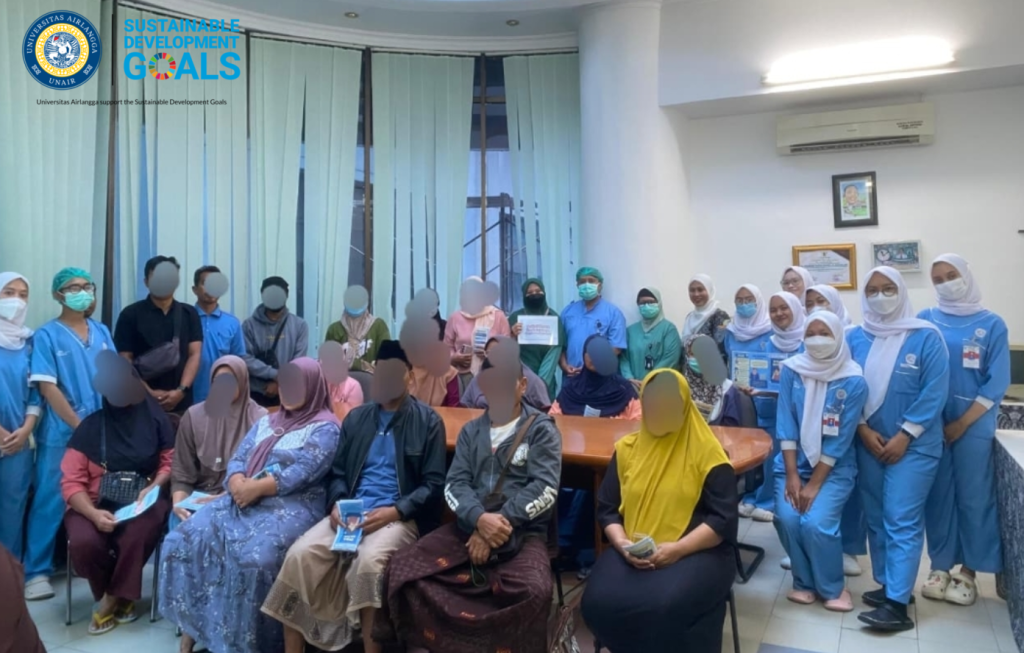
NERS NEWS — Students of the Nursing Professional Program, Faculty of Nursing, Universitas Airlangga, currently undertaking their clinical placement at the Neuro ICU of Dr. Soetomo General Academic Hospital, Surabaya, conducted a Hospital Health Promotion (PKRS) activity entitled “Pneumonia: Recognize the Symptoms, Prevent the Spread.” The program was held on Thursday, July 22, 2026, from 10:10 a.m. to 11:13 a.m. in the Neuro ICU waiting area and was attended by family members accompanying patients receiving intensive care. The activity was supported by Erna Dwi Wahyuni, S.Kep., Ns., M.Kep., Academic Supervisor; Septi Kurniasih, S.Kep., Ns., Clinical Supervisor; and Heny Megawati, S.Kep., Ns., Head Nurse of the Neuro ICU. The educational session was organized to enhance family members’ knowledge and understanding of pneumonia, particularly its risk factors, signs and symptoms, modes of transmission, preventive measures, and the important role families play in supporting infection prevention during intensive care.
Pneumonia is a lung infection that may be caused by bacteria, viruses, or fungi. Patients admitted to the ICU are at an increased risk of developing Hospital-Acquired Pneumonia (HAP) due to the use of invasive medical devices such as mechanical ventilators and nasogastric tubes (NGTs), impaired consciousness, prolonged immobilization, and extended hospital stays. Therefore, family members play an essential role in supporting infection prevention by practicing proper hand hygiene, maintaining a clean patient environment, observing appropriate cough etiquette, and following healthcare professionals’ recommendations while accompanying patients. During the educational session, the presenters discussed the definition and causes of pneumonia, its signs and symptoms, routes of transmission, prevention strategies, treatment, and risk factors specific to ICU patients. The information was delivered using educational leaflets and flip charts to make the material easier for participants to understand.
The health education session was conducted in an orderly, conducive, and interactive atmosphere. All participants remained engaged throughout the program and paid close attention to the presentations. Their enthusiasm was evident during the discussion and question-and-answer session. During the evaluation, participants were able to explain the definition and causes of pneumonia, identify its signs and symptoms, describe how the disease spreads, and outline simple preventive measures and treatment options.
Through this Hospital Health Promotion (PKRS) activity, it is expected that patients’ families will gain a better understanding of the importance of preventing pneumonia, particularly among critically ill patients receiving intensive care. In addition to improving knowledge, the program aims to strengthen family awareness and involvement in implementing infection prevention measures, thereby helping reduce the risk of Hospital-Acquired Pneumonia (HAP), supporting successful treatment outcomes, and improving patient safety and the overall quality of healthcare services. Overall, the PKRS activity was successfully conducted and received positive responses from participants, healthcare professionals, and supervising staff.
Writer: Nadila Maulida





