
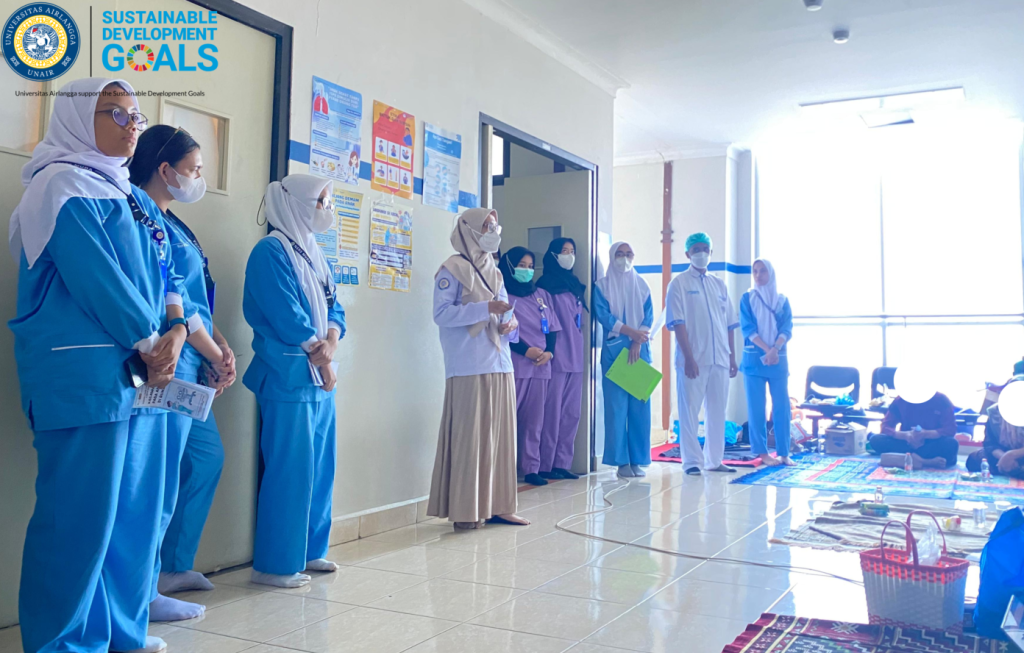
NERS NEWS — Universitas Airlangga Nursing Professional Program students from Group D4.1 during their Pediatric Nursing clinical rotation conducted a Hospital Health Education activity on the importance of recognizing and detecting pediatric emergencies early after NICU/PICU care on Friday (May 29, 2026) in the NICU/PICU waiting area of Universitas Airlangga Hospital, Surabaya. This activity aimed to increase the knowledge of parents and families in responding to pediatric emergency conditions quickly and appropriately in order to reduce the risk of complications.
This educational activity focused on improving the ability of parents and family members to recognize the early signs of pediatric emergencies, such as respiratory distress, decreased consciousness, seizures, and changes in vital conditions requiring immediate medical attention. Participants were introduced to early warning signs as well as rapid referral procedures to the hospital’s Emergency Department (ED). The activity was facilitated by Nursing Professional Program students under the supervision of the Head of the NICU/PICU Unit at Universitas Airlangga Hospital and involved parents of patients who had previously received or were currently receiving care in the NICU/PICU at Universitas Airlangga Hospital.
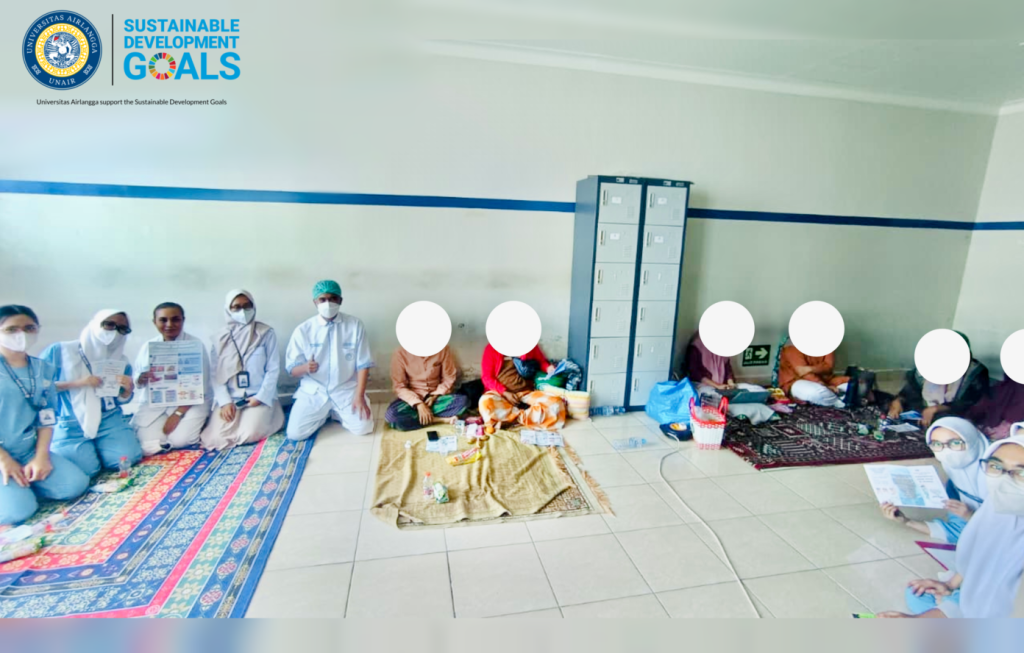
The activity aimed to strengthen families’ capacity to detect pediatric emergencies at an early stage so that treatment can be provided more quickly and appropriately. This aligns with efforts to improve the quality of pediatric healthcare services and prevent infant and child mortality. The program also supports the achievement of the Sustainable Development Goals (SDGs), particularly Goal 3, Good Health and Well-Being, through the strengthening of responsive and educational healthcare systems. The Head of the NICU/PICU Unit at Universitas Airlangga Hospital stated that this education is important for both parents and healthcare professionals. “Many pediatric emergency cases can actually be prevented if the early warning signs are recognized sooner. Therefore, educational activities like this are an important part of our services.”
This activity supports several Sustainable Development Goals (SDGs), including:
- SDG 3: Good Health and Well-Being: This activity contributes to improving children’s health status through education on the early detection of pediatric emergencies. By increasing the ability to recognize the early signs of critical conditions in children, delays in treatment can be reduced, thereby lowering child morbidity and mortality rates. This is in line with efforts to improve safe, timely, and high-quality healthcare services.
- SDG 4: Quality Education: This educational activity serves as a form of health learning for both healthcare providers and parents of patients. Through this education, parents and families gain knowledge on how to respond to pediatric emergency situations. The activity reflects the concept of lifelong learning and continuous health education.
Through this educational activity, it is hoped that both the community and healthcare professionals will become more responsive in recognizing pediatric emergency conditions after NICU/PICU care. It is also expected that this program will continue to be developed to improve the quality of pediatric healthcare services and support the achievement of SDGs in the fields of health and education.
Writer: Adinda Safitri





