NERS NEWS — Surabaya — Hospitalization in children is one of the primary stressors that often triggers anxiety, fear, and emotional disturbances during their stay in the hospital. The unfamiliar hospital environment and invasive medical procedures have the potential to hinder the healing process and disrupt children’s growth and developmental stages if not addressed through a holistic approach.
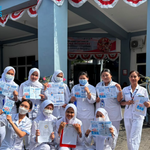
In response to this clinical phenomenon, Group 1/A2 of the B27 Young Nurses from the Nursing Professional Education Program, Faculty of Nursing, Universitas Airlangga (FKp Unair), implemented an evidence-based non-pharmacological intervention. They successfully organized a play therapy program entitled “GYPSY ART PLAY” (Gypsum Painting Art Therapy): Cheerful Play to Reduce Hospitalization Stress in Children on Thursday, May 21, 2026.
This activity was conducted directly in the BONA 1 Ward (Pediatric Inpatient Ward) at Dr. Soetomo General Academic Hospital, Surabaya, targeting school-aged pediatric patients accompanied by their respective parents.
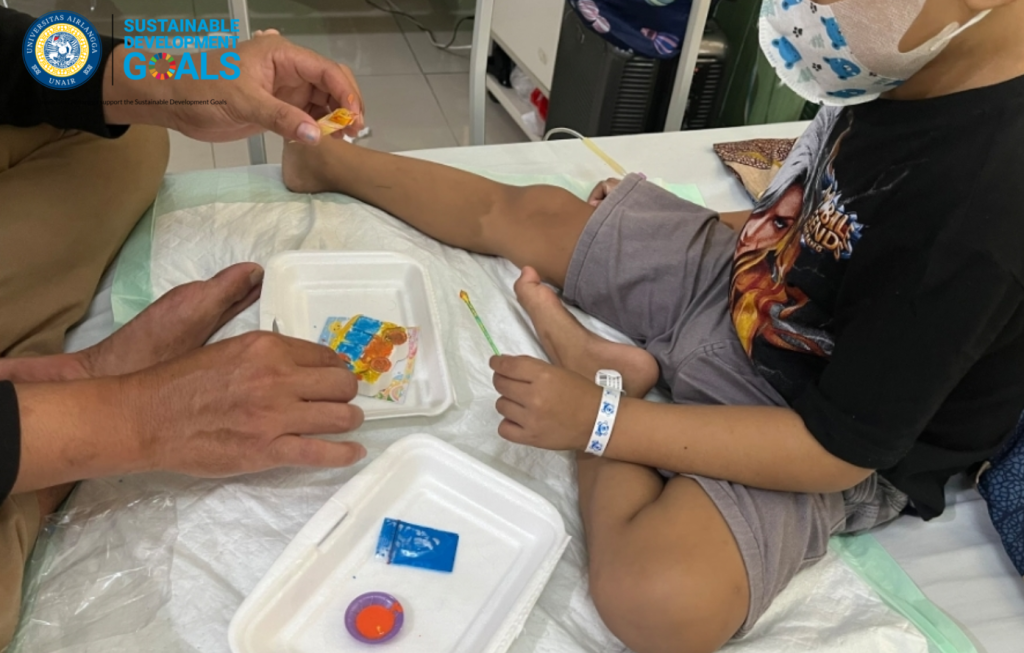
The “GYPSY ART PLAY” program is an art therapy modality that integrates cognitive, motor, and psychological stimulation. Using painting activities on gypsum transportation models as an expressive medium, this intervention aims to divert children’s attention away from pain (distraction therapy), facilitate the release of emotional tension caused by hospitalization, and optimize patients’ fine motor functions during their inpatient care.
The implementation of this activity was carried out under the clinical and academic supervision of Prof. Dr. Hj. Yuni Sufiyanti, S.Kp., M.Kes as the Academic Supervisor of FKp Unair, and Panca Rusidawati, S.Kep., Ns as the Clinical Supervisor of the BONA 1 Ward at Dr. Soetomo General Academic Hospital, Surabaya.
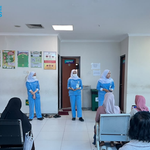
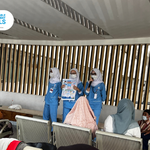
The activity began promptly at 10:00 WIB and was opened by Eka Shafira Audrina as the moderator, who established a time contract and explored the children’s initial perceptions (apperception) regarding play activities. To ensure patient safety and intervention effectiveness, all painting instruments used had been adapted to child safety standards, including the use of modified cotton-bud brushes and non-toxic watercolor paints.
During the implementation, a patient-centered care approach was intensively applied. The implementation team members, consisting of Elya Arundati, Galuh Julieta Puriningtyas, Mohammad Ferdy Arrosyd, and Yulisa Putri Nabila, served fully as clinical facilitators.
Through the active presence of the facilitation team, a conducive therapeutic environment was successfully created. Pediatric patients demonstrated active engagement and positive affect, which clinically indicated a reduction in anxiety toward the hospital environment. Parents also participated cooperatively in supporting their children’s independence throughout the activity.Based on objective
Based on objective evaluation parameters conducted at the end of the session, the activity achieved significant outcomes. Motor and Cognitive Evaluation: more than 75% of participants were able to maintain full concentration, demonstrated improved fine motor control accuracy, and successfully combined colors harmoniously on the gypsum media. Psychological Evaluation: more than 75% of participants exhibited adaptive emotional responses, characterized by relaxed facial expressions, reduced fussiness, and increased cooperativeness during the play therapy session.
Through the success of the “GYPSY ART PLAY” program, it is hoped that professionally guided art-based play therapy interventions conducted by nursing personnel can continue to be integrated as a standard pediatric nursing intervention in hospitals. This is crucial in realizing comprehensive, humane, and child-friendly nursing care (atraumatic care).
Writer: Group 1/A2 B27 Young Nurses, Faculty of Nursing, Universitas Airlangga