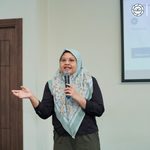
Students of the Faculty of Nursing, Universitas Airlangga, carried out a Project-Based Learning (PjBL) activity titled SIJELITA (Skrining dan Edukasi Jeli terhadap Kusta/Morbus Hansen melalui Pendekatan Biopsikososial untuk Pencegahan Kecacatan, Penguatan Kepercayaan Diri, dan Penghapusan Stigma Sosial / Keen Screening and Education on Leprosy/Morbus Hansen through a Biopsychosocial Approach for Disability Prevention, Self-Confidence Strengthening, and Social Stigma Elimination) on Saturday (07/11/2026) at Balai RW 06 Kalijudan, Kalijudan Sub-district, Mulyorejo District, Surabaya City. This activity aimed to increase public knowledge and awareness regarding leprosy, particularly related to early detection, disability prevention, self-care, and the importance of eliminating stigma and discrimination against leprosy patients.
The SIJELITA series of activities began with participant registration and health screening as an effort for early detection of leprosy signs and symptoms. Screening was conducted through skin sensation examination using cotton and a reflex hammer, skin condition observation using a magnifying glass, and gathering information regarding the participants’ medical history and complaints. Participants also filled out the SIJELITA self-health screening form to help identify signs or factors requiring further examination. Next, participants completed a pre-test using digital media to determine their initial level of knowledge regarding leprosy.
The activity then continued with health counseling discussing the definition and causes of leprosy, early signs and symptoms, differences between leprosy and other skin diseases, modes of transmission, prevention, and treatment. In addition, participants were given an understanding of the impact of leprosy on nerve damage and limb function, including the risk of loss of sensation, muscle weakness, and unnoticed wounds. Education also covered psychological and social impacts that patients may experience, such as anxiety, shame, low self-esteem, and discrimination. Material regarding myths and facts about leprosy was also delivered to correct public misconceptions about the disease.
The delivered material was then reinforced through demonstrations of independent home screening and wound care on body parts experiencing decreased sensation or numbness. This demonstration aimed to provide participants with an understanding of the importance of checking skin conditions independently, maintaining hygiene, protecting hands and feet from injury, and performing wound care according to proper principles. The activity continued with discussion and a question-and-answer session so participants could deepen their understanding of leprosy. After the entire series of education was completed, participants worked on a post-test as an evaluation of their knowledge after attending the activity. The event then closed with games, awards given to the most active participant, the most critical participant, and game winners, delivery of impressions and messages, and group documentation.
In its implementation, the SIJELITA activity was organized by Group 1 students of Class A2, Cohort 2024, Faculty of Nursing, Universitas Airlangga, under the guidance of supervising lecturers, namely Dr. Abu Bakar, M.Kep., Ns.Sp.Kep.M.B. and Dr. Hanik Endang Nihayati, S.Kep., Ns., M.Kep. This activity involved the community of RW 06 Kalijudan targeting residents aged 25 years and above and was attended by 25 participants. The implementation of the activity was also supported through coordination with local neighborhood officials to ensure the smooth running of the health education activity for the community.
The SIJELITA activity was carried out as an effort to increase public awareness of the importance of early detection and disability prevention due to leprosy. Through the education provided, the community is expected to be able to recognize the early signs and symptoms of leprosy, understand the importance of early examination and treatment, and know how to maintain and care for body parts at risk of sensory impairment. In addition, the applied biopsychosocial approach is expected to increase public empathy and care for the psychological condition of patients and encourage the creation of an environment free from stigma, discrimination, and exclusion.
The SIJELITA activity also supports the achievement of the Sustainable Development Goals (SDGs), particularly Goal 3 on Good Health and Well-being. This support is realized through promotive and preventive efforts in the form of health screening, early detection education, disability prevention, and increasing public understanding regarding the importance of psychosocial support for leprosy patients.
Through the SIJELITA activity, students of the Faculty of Nursing, Universitas Airlangga, contributed to increasing public knowledge and concern regarding leprosy. Education on early detection, disability prevention, self-care, and elimination of social stigma is expected to serve as a provision for the community to recognize and respond to leprosy appropriately. This activity also serves as a form of Project-Based Learning implementation that provides opportunities for students to apply nursing science directly to the community through a biopsychosocial approach.
Writer: Siti Istiqomah