
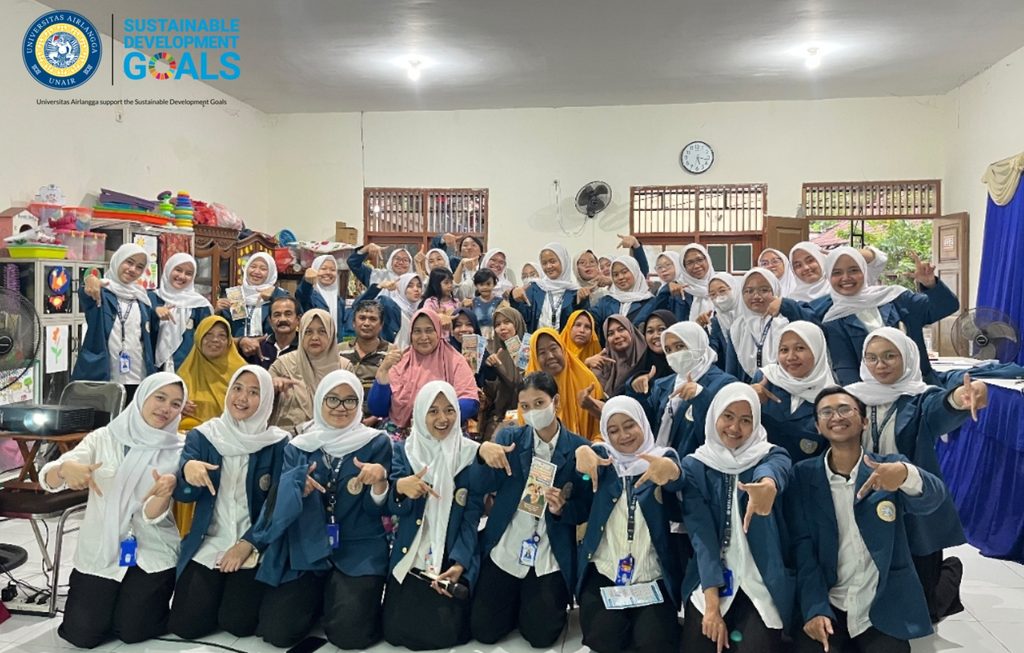
NERS NEWS — Nursing Profession Education Program students of the Faculty of Nursing, Universitas Airlangga, conducted an ergonomics education and stretching demonstration activity entitled “Take a Short Break, Work Productively” for business owners at the RW 07 Community Hall, Dukuh Sutorejo Subdistrict, Surabaya, on Thursday, September 10, 2026. The activity, which covered ergonomic working postures and simple stretching practices, aimed to increase workers’ knowledge, prevent musculoskeletal complaints and work-related fatigue, and support business productivity through healthy and safe work habits.
As part of community and family health nursing practice, Nursing Profession students of Groups 1, 2, and 3, accompanied by academic advisors Dr. Makhfudli, S.Kep., Ns., M.Ked.Trop., Prof. Ferry Efendi, S.Kep., Ns., M.Sc., PhD, and Dr. Eka Misbahatul M.H., S.Kep., Ns., M.Kep., as well as clinical supervisor Waji, S.Kep., Ns. from Kalijudan Community Health Center, organized an education and Occupational Health Efforts (UKK) training activity entitled “Take a Short Break, Work Productively: Ergonomics and Stretching Education as an Effort to Maintain the Health and Productivity of Business Owners” at the RW 07 Community Hall, Dukuh Sutorejo Subdistrict, on Thursday, September 10, 2026, at 16:00 WIB. This activity was designed to provide business owners with practical knowledge and skills in implementing proper working postures, mastering safe load-handling techniques, and making physical stretching a habit during breaks in their daily activities.
Work activities in the informal business sector that require prolonged standing, bending while sitting, and repetitive movements often trigger physical fatigue and musculoskeletal disorders that reduce work productivity. Based on the initial data collection survey, 74.6% of business owners in the local area complained of aches and joint pain due to poor ergonomic work habits. Therefore, an educational and promotive approach is needed to equip self-employed workers with healthy work habits to prevent prolonged muscle injuries.
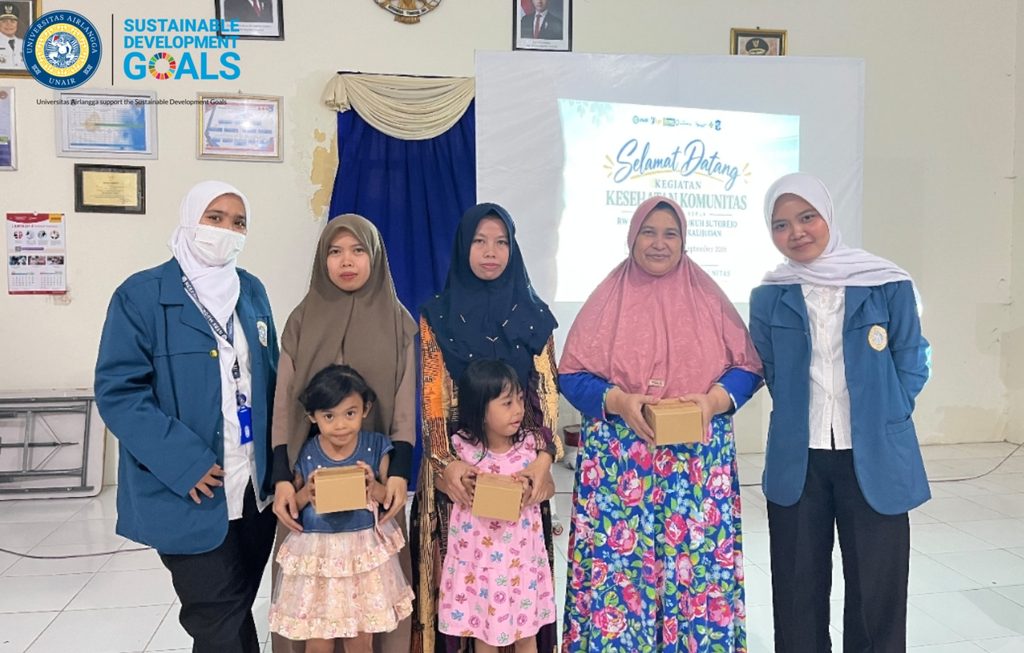
During the activity, participants were invited to listen to education about ergonomic principles through leaflets and PPT presentations, understand the proper upright sitting position with both feet flat on the floor, and practice techniques for lifting heavy objects without bending the back. Participants were also guided to directly practice five simple stretching movements, starting from neck stretches, cross-body shoulder stretches, upper back stretches, to wrist stretches, with a holding duration of 8–10 seconds. The business owners appeared enthusiastic in following each demonstration, actively participated in the question-and-answer session, and were able to correctly demonstrate the entire series of movements during the evaluation.
In addition to providing health protection benefits for business owners, this activity served as a concrete means for students to implement community nursing care knowledge directly in the community. Through an applicable promotive and preventive approach, the students sought to encourage community independence in creating a safe and ergonomic work environment. This activity also contributed to the achievement of the Sustainable Development Goals (SDGs), particularly SDG 3 (Good Health and Well-Being) through the prevention of musculoskeletal complaints among informal workers, and SDG 4 (Quality Education) through the implementation of education that encourages continuous improvement of individual knowledge.
Through this ergonomics and stretching education activity entitled “Take a Short Break, Work Productively,” business owners in RW 07, Dukuh Sutorejo Subdistrict, are expected to increase their awareness, maintain ergonomic working postures, and regularly perform independent stretching during breaks in their working hours to prevent musculoskeletal complaints and physical fatigue. This activity also serves as a concrete form of contribution by Nursing Profession students of the Faculty of Nursing, Universitas Airlangga, in supporting occupational health among informal sector workers and encouraging the creation of a healthy, safe, and sustainably competitive work environment.

Writers: Beta Ceria T. & Luluk Mursidah M.





