
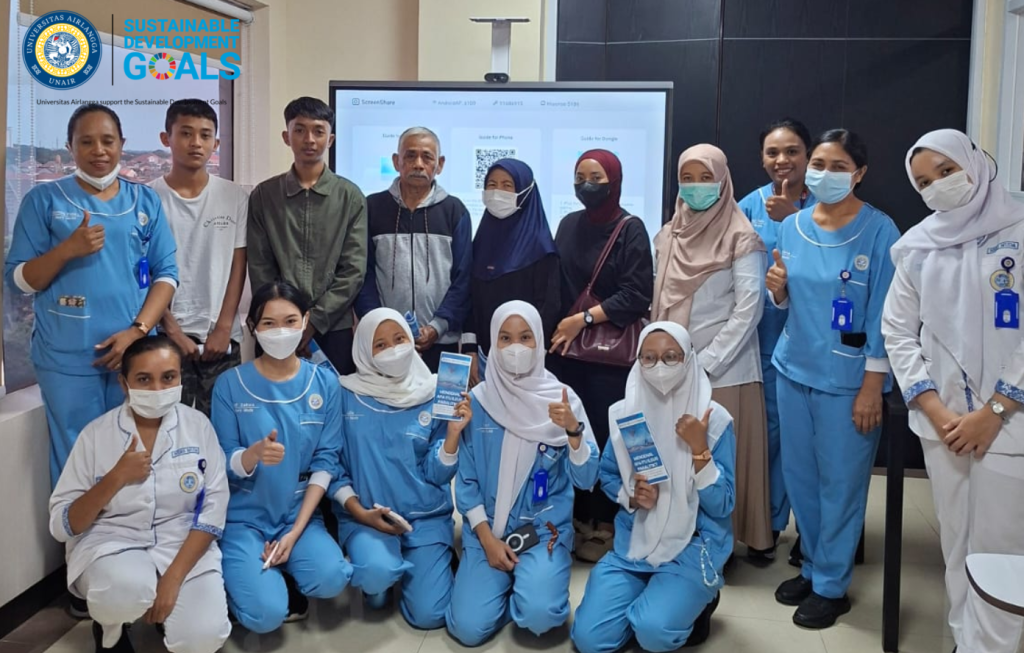
NERS NEWS — Students of the Nursing Professional Education Program, Faculty of Nursing, Universitas Airlangga, Class B27, conducted a Hospital Health Promotion Program (PKRS) on Friday, April 10, 2026. The activity took place in IRNA 6A Room at Rumah Sakit Universitas Airlangga and was attended by patients and their families receiving treatment in the ward.
The PKRS carried the theme “Management of Paralytic Ileus in Preventing Complications and Enhancing Patient Recovery.” The program aimed to improve the knowledge of patients and their families regarding paralytic ileus and appropriate management to support the healing process.
The activity was conducted through lectures and interactive discussions, supported by educational media such as posters and leaflets. The materials presented included the definition of paralytic ileus, causes and risk factors, signs and symptoms, possible complications, as well as proper care and nutritional management.
The PKRS session was held from 2:30 PM to 3:30 PM WIB and was attended by patients and family members undergoing treatment in IRNA 6A. During the activity, the students were supervised by Academic Supervisor Dr. Abu Bakar and Clinical Supervisor Rahmatul Fitriyah.
Paralytic ileus is a condition involving impaired intestinal peristalsis without any mechanical obstruction, resulting in the accumulation of gas and fluid in the intestines. This condition may occur due to postoperative effects, infection, electrolyte imbalance, or the use of certain medications. Common symptoms include abdominal bloating, abdominal pain, nausea, vomiting, inability to pass stool or gas, and decreased appetite.
During the session, participants received education on management strategies such as bowel rest (temporary fasting according to medical advice), monitoring vital signs and bowel sounds, gradual early mobilization, and the importance of maintaining fluid and electrolyte balance. In addition, family members were educated to recognize warning signs such as repeated vomiting, increasing abdominal distension, or lack of improvement, so they could promptly report them to healthcare professionals.
Participants’ enthusiasm was evident through their active involvement during the discussion and question-and-answer session. They showed great interest by asking questions related to the care and prevention of paralytic ileus complications both in the hospital and after discharge.
Writer: Lintang Prameswari





