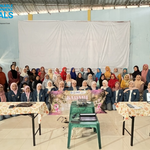
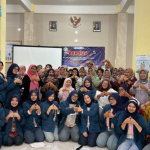
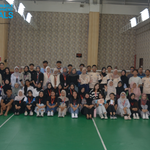
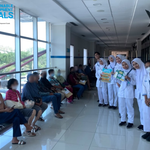
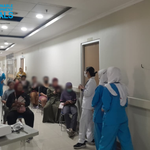
NERS NEWS — On Monday, September 7, 2026, a health education activity was conducted with the topic “Optimizing Parents’ Knowledge of Balanced Nutrition to Support Children’s Growth and Development through ‘Isi Piringku’ Education” by students of the Nursing Profession Education Program, Faculty of Nursing, Universitas Airlangga, as part of the Community and Family Health Nursing activity in the working area of Klampis Ngasem Community Health Center.
The activity was conducted from 09:00–10:00 a.m. WIB at the RW 01 Klampis Ngasem Community Hall, targeting parents with children under five years old. This activity aimed to improve parents’ knowledge of the principles of balanced nutrition, the “Isi Piringku” concept, types of nutritious food, and its implementation in daily meals to support children’s growth and development.
The activity was conducted interactively through material delivery, discussion, simulation using the “Isi Piringku” media, and a question-and-answer session. The material presented included the definition of balanced nutrition, the four pillars of balanced nutrition, the difference between the “Empat Sehat Lima Sempurna” and “Isi Piringku” concepts, as well as food portions consisting of staple foods, side dishes/protein, vegetables, and fruit. In addition, participants were given an understanding of the importance of providing diverse and balanced foods, rather than only foods that can make children feel full quickly.
Throughout the activity, all participants followed the activity well and actively participated in the education process. Participants paid attention to the material presented, followed the simulation, and actively shared their experiences and questions related to feeding children.
During the discussion session, one mother shared a problem regarding her child’s eating habits. She explained that her child tended to have a poor appetite and preferred certain foods, especially instant noodles, while disliking fruits and vegetables. In response to the question, the presenter provided education that parents can try preparing less-preferred food ingredients in a form that is more appealing and familiar to children without eliminating their nutritional value.
The presenter provided several examples, such as processing fruit into juice, mixing vegetables with chicken or other protein sources and then making them into homemade nuggets, and processing potatoes into homemade potato sticks. Parents were also encouraged to introduce foods gradually, provide food variety, and create a pleasant mealtime atmosphere without forcing children to eat. This approach is in line with the activity material, which emphasizes the importance of food diversity and parental involvement in developing healthy eating habits in children.
The activity concluded with a reinforcement of the importance of implementing “Isi Piringku” in daily life. Participants are expected to be able to provide diverse and balanced meals at home and adjust food according to children’s needs and growth conditions. Overall, the activity proceeded smoothly, in a conducive and interactive manner, and received a positive response from the participants.
Writer: Sekar Ayu Cahyani