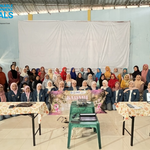
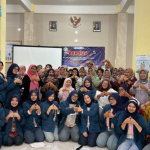
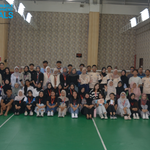
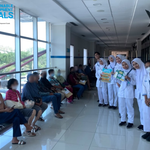
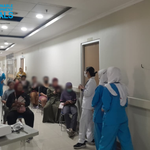
NERS NEWS — As students enter adolescence, they begin to experience various changes in their bodies that need to be properly understood. As part of efforts to improve health knowledge among school-age students, Nursing Profession Education Program students of the Faculty of Nursing, Universitas Airlangga, through the School Health Unit (UKS) Health Efforts Working Group of the Kalijudan Group, Second Wave, Community and Family Nursing Rotation, provided reproductive health education to seventh-grade students of SMP Muhammadiyah 10 Surabaya on Thursday, September 10, 2026.
Reproductive health is not only related to the condition of the reproductive organs but also includes hygiene, menstrual health, prevention of sexually transmitted infections (STIs), as well as efforts to prevent various disorders of the reproductive system. This understanding is important to provide to adolescents so that they can recognize their bodies and begin to adopt habits to maintain reproductive health from an early age.
In this activity, students received material about the female and male reproductive organs and their functions. The education also discussed how to maintain reproductive organ hygiene in daily life, such as keeping the genital area clean, changing underwear regularly, and paying attention to the condition of the body if unusual complaints arise.
In addition to introducing reproductive organs and reproductive hygiene, the students delivered material about several diseases that can affect the reproductive system and urinary tract, such as urinary tract infections, HIV/AIDS, syphilis, and gonorrhea. Students were also provided with an understanding of STI prevention measures, including maintaining personal hygiene, obtaining accurate information, receiving vaccinations and health examinations when necessary, and avoiding risky behaviors.
The material was delivered by involving students through discussion and question-and-answer sessions, allowing students to ask questions about material they did not yet understand. Through this process, the students not only provided information but also encouraged the students to be more open in seeking reproductive health information from appropriate sources.
This educational activity was one form of the implementation of the role of Nursing Profession students in promotive and preventive efforts in the school environment. Through the UKS Working Group, the students also played a role in providing health education according to the needs of students and supporting the development of healthy habits from adolescence. This activity supports SDG 3: Good Health and Well-Being through increasing students’ knowledge and awareness of reproductive health and disease prevention efforts. Health education in the school environment also supports SDG 4: Quality Education, particularly by providing health knowledge that students can apply in their daily lives.
Through this activity, students are expected to better understand changes in and conditions of their bodies, maintain reproductive organ hygiene, and recognize signs of health problems that need to be examined. Students are also expected not to hesitate to seek information and ask for assistance from parents, teachers, or health professionals when they have questions or experience complaints related to reproductive health.
Writer: Dea Wahidah Rahmadani