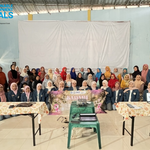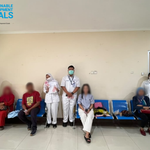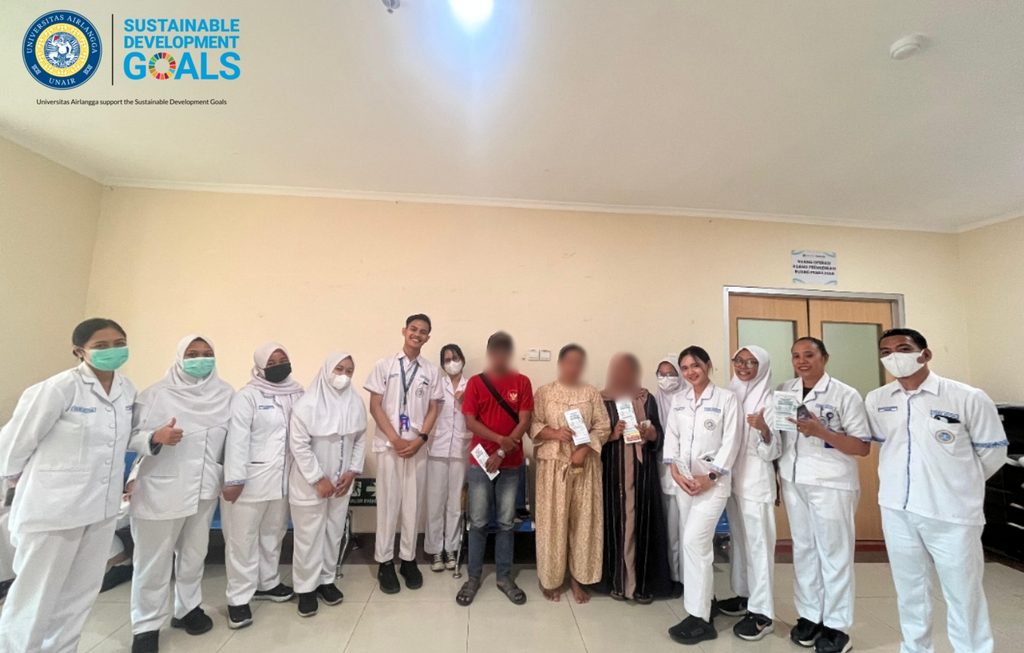
NERS NEWS — Surabaya, September 4, 2026 — Young Nurses from the Nursing Profession Education Program, Faculty of Nursing, Universitas Airlangga (Unair), held a Hospital Health Education (PKRS) activity for patients’ families in the OK Anesthesia Grha Trimed RSKI Waiting Room on Friday (September 4). The activity addressed the topic “The Importance of Preoperative Fasting, Aspiration Risk, Gradual Postoperative Diet, and Contraindications to Oral Intake” as an effort to increase patients’ families’ understanding of preparation and recovery after surgery.
The activity took place from 12:00 to 1:00 p.m. using lecture and question-and-answer methods. The material presented covered the importance of fasting before surgery, the risk of aspiration during anesthesia and surgery, fasting time guidelines, stages of diet administration after surgery, and conditions that need to be considered before patients are allowed to resume oral food and fluid intake.
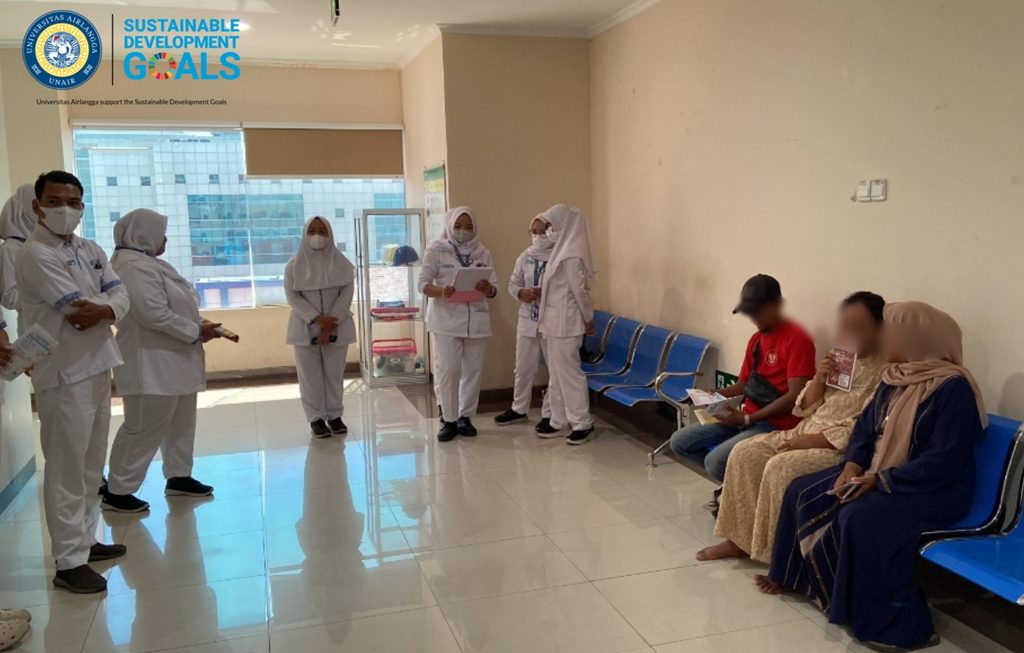
The education was delivered using an interactive approach so that participants not only received information but also understood the reasons behind each recommended action. Patients’ families were given an explanation that fasting before surgery is an important part of preparation to reduce the risk of aspiration. Meanwhile, the provision of intake after surgery needs to consider the patient’s clinical condition, including their level of consciousness and recovery of gastrointestinal function.
The activity proceeded smoothly. The audience actively and cooperatively followed the material presented and participated in the question-and-answer session to clarify the information provided. The activity evaluation also showed an increase in participants’ understanding of preoperative fasting, aspiration risk, and postoperative diet.

Through this PKRS activity, Young Nurses of the Faculty of Nursing, Unair, also strengthened the role of nursing education in supporting patient safety. A good understanding among patients and families regarding preparation before surgery and nutritional intake after surgery is expected to help prevent complications and support a more optimal recovery process.
This activity also supports the achievement of the Sustainable Development Goals (SDGs), particularly SDG 3: Good Health and Well-Being, through improving health literacy and strengthening promotive and preventive efforts in healthcare settings, as well as SDG 4: Quality Education.
Writer: Young Nurses of the Nursing Profession Education Program, Batch 48