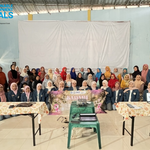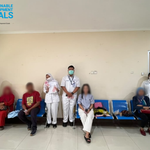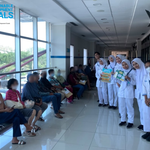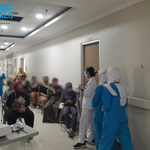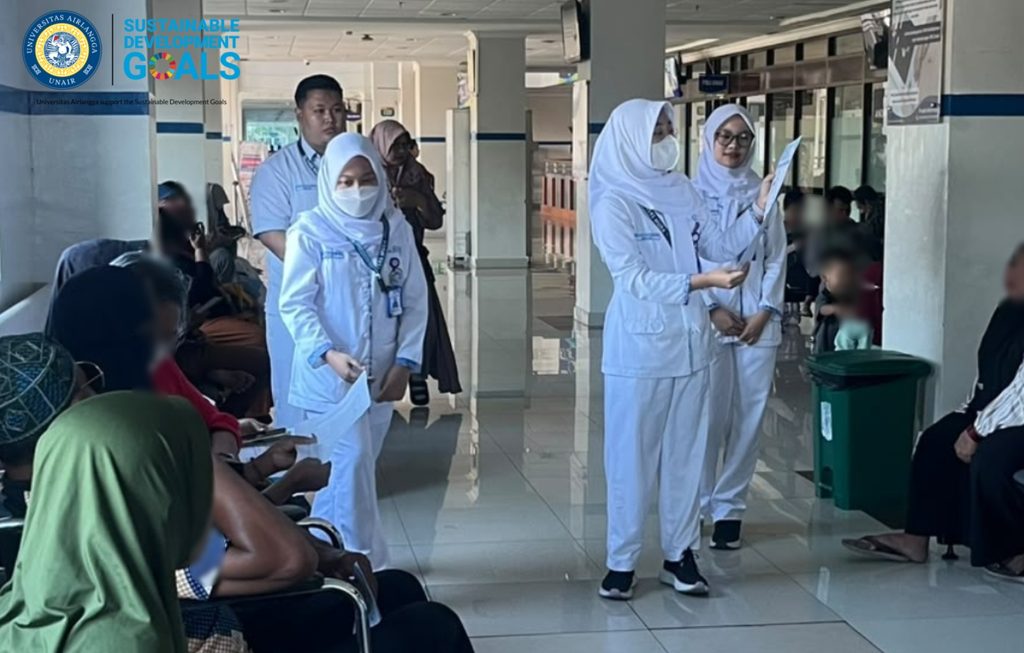
NERS NEWS — Nursing Profession Education Program students of the Faculty of Nursing, Universitas Airlangga, Group 2, Batch 49, conducted a health education activity on “Infection Prevention for Surgical Wounds” for patients and families at Surgical Clinic A, Universitas Airlangga Hospital, on Thursday, September 3, 2026, from 09:00–10:00 a.m. WIB. This activity aimed to improve the understanding of postoperative patients and families regarding the signs of infection, factors affecting the wound healing process, and steps to prevent infection during the care process.
This health education activity was conducted through a lecture method using posters and leaflets, followed by a discussion and question-and-answer session. The material presented included the definition of surgical wounds, the wound healing process, the impact of infection on wound healing, signs of infection, factors affecting the occurrence of infection, appropriate actions when signs of infection are found, causes of infection, and ways to prevent infection in surgical wounds. The material was delivered systematically so that patients and families could gain an adequate understanding of wound care and infection prevention.
The educational material was delivered directly by two presenters representing Group 2 of the Nursing Profession Education Program, Faculty of Nursing, Universitas Airlangga, Batch 49, to patients and families. The activity was conducted communicatively through the delivery of material, discussion, and a question-and-answer session. Patients and families were given the opportunity to ask questions about ways to prevent infection, signs of infection, and actions that should be taken if changes are found in the surgical wound.
One of the materials presented was the recognition of signs of infection using the concept “BENGKAK,” which includes Bengkak (swelling), Eritema or redness, increasing Nyeri (pain), Getah or pus discharge, Kulit terasa hangat (skin feeling warm), Aroma tidak sedap (unpleasant odor), and Kondisi badan demam (fever). This concept was used to help patients and families recognize changes in the condition of the wound and increase awareness of the possibility of infection.
In addition to the signs of infection, patients and families were given an understanding of factors affecting infection through the concept “SEHAT,” namely Status gizi (nutritional status), Eksisting disease or comorbidities, Higiene (hygiene), Aktivitas (activity), and Teknik perawatan yang benar (proper care techniques). Infection prevention efforts were then reinforced through the “AMAN” principle, namely Atur Kebersihan (Maintain Cleanliness), Makan Protein (Eat Protein), Amati Luka (Observe the Wound), and No Sentuh (Do Not Touch). These principles serve as simple steps that can be applied during wound care according to the recommendations of healthcare professionals.
This activity aimed to increase patients’ and families’ knowledge so that they could recognize signs of infection, understand factors that may affect wound healing, and properly implement infection prevention measures. The education is expected to increase the involvement of patients and families in the care process and help prevent complications caused by infection in surgical wounds. This activity also supports the achievement of the Sustainable Development Goals (SDGs), particularly SDG 3: Good Health and Well-Being, through increasing health literacy and infection prevention efforts, as well as SDG 4: Quality Education through the provision of informative and applicable health education. Throughout the activity, patients and families demonstrated enthusiasm and active participation in the education session. The question-and-answer session proceeded interactively, with questions regarding infection prevention and wound care.
The education activity on infection prevention for surgical wounds is expected to improve patients’ and families’ understanding of the importance of proper wound care and early recognition of signs of infection. The application of the BENGKAK, SEHAT, and AMAN concepts is expected to serve as a simple reminder for patients and families to maintain cleanliness, observe the condition of the wound, meet nutritional needs, and provide care according to the recommendations of healthcare professionals. Through this activity, students of the Nursing Profession Education Program, Faculty of Nursing, Universitas Airlangga, also contributed to improving public health literacy and supporting the achievement of the SDGs in the fields of health and education.
Writer: Devi Enjelika Mudumi