NERS NEWS — The rapid development of digital technology today has made it easier for adolescents to access various kinds of information. However, without proper literacy, this convenience may increase the risk of exposure to negative content, cyberbullying, the phenomenon of FOMO (Fear of Missing Out), and misconceptions about sexual health.
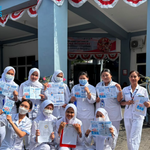
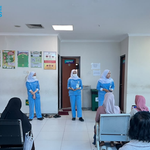
In response to this complex phenomenon, Group 3 Class A4/A2024 of the Faculty of Nursing, Universitas Airlangga, held an innovative community service program entitled “Beyond Puberty: Know Yourself for the Future.” The activity, which was designed in the form of Project-Based Learning (PJBL), was held on Thursday, June 4, 2026, at SMP Hidayatul Ummah, Mulyorejo, Surabaya.
The uniqueness of this program lies in its integration of four branches of nursing science: Maternity Nursing, Pediatric Nursing, Health and Acute Illness, and Social and Cultural Psychology in Nursing. The entire series of activities was carried out under the guidance of the facilitator lecturer team: Retnayu Pradanie, S.Kep., Ns., M.Kep., Nuzul Quraniati, S.Kep.Ns., M.Ng., Ph.D., and Nur Arifah Astri, S.Kep., Ns., M.Kep.
The activity, attended by around 28 female junior high school students aged 14–17 years, focused on providing a comprehensive biological understanding of puberty. The group discussed the importance of maintaining personal hygiene to prevent various reproductive health problems.
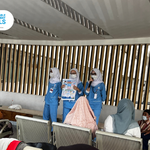
The participants were given practical guidance on menstrual hygiene management to prevent reproductive tract infections, as well as education on the early detection of pathological vaginal discharge, a condition that often makes adolescents feel embarrassed or afraid to seek consultation. Through leaflet distribution and interactive material delivery, the students also emphasized the real dangers of early marriage and teenage pregnancy, which, according to WHO data in 2024, increase the risk of eclampsia and maternal mortality.
Beyond physical health, the “Beyond Puberty” program also highlighted the psychosocial aspects of adolescence. Biologically, the hormonal changes of puberty can trigger serotonin imbalance, leading to rapid mood changes or mood swings. This condition may be worsened by academic pressure and unrealistic beauty standards on social media, which can negatively affect students’ self-esteem.
In this session, UNAIR Faculty of Nursing students trained the participants to regulate their emotions in a healthy way. Several simple techniques were introduced as forms of self-protection, including stress management, building positive affirmations, limiting screen time, developing the courage to build healthy relationships, and practicing positive communication.
Author: Grecia Stefania T
Editor: Eva Khoirunnisa Adinta (Airlangga Nursing Journalist)