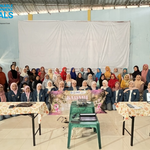
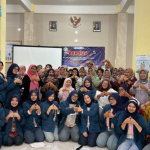
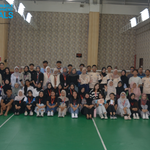
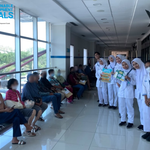
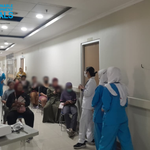
NERS NEWS — Nursing Profession Education Program students of Group 2, Second Wave, Community Nursing Rotation at Klampis Ngasem Community Health Center, conducted a health education activity on Monday, September 14, 2026. The activity was held at 08:00 WIB at Klampis Ngasem Community Health Center, carrying the theme “CERMAT: Prevent and Control Hypercholesterolemia for a Healthier Life.” The target of the activity was the community in the working area of Klampis Ngasem Community Health Center. This activity aimed to increase participants’ understanding of hypercholesterolemia and encourage the implementation of healthy living behaviors to prevent and control blood cholesterol levels.
The activity began with student preparation and educational media in the form of posters and leaflets. After the participants gathered, the students opened the activity by greeting the participants, introducing themselves, stating the purpose of the health education, explaining the time contract, and explaining the topic and activity mechanism. Before entering the material, the students explored the participants’ initial knowledge about hypercholesterolemia to determine their understanding before receiving health education. The first material presented was about the basic definition of cholesterol and hypercholesterolemia. Participants were given an understanding that cholesterol is a fatty compound needed by the body, while hypercholesterolemia is a condition in which cholesterol levels, especially Low-Density Lipoprotein (LDL), in the blood exceed safe limits. Excessive cholesterol buildup on the walls of blood vessels can form plaques that interfere with blood flow and increase the risk of coronary heart disease and stroke.
The discussion then continued with the signs, symptoms, and importance of early detection. The students explained that hypercholesterolemia generally does not cause typical symptoms in its early stages, so it often goes unnoticed. In certain conditions with very high cholesterol levels due to hereditary factors, signs such as xanthelasma and xanthoma may be found. Participants were also given an understanding that blood tests at healthcare facilities are necessary to accurately determine cholesterol levels. The implementation of these steps is expected to help the community maintain cholesterol levels and reduce the risk of cardiovascular disease. The students also provided education regarding medical management and adherence to the use of cholesterol-lowering medications.
After the material was delivered, the activity continued with a question-and-answer session and a brief evaluation. Participants were given the opportunity to ask questions about the hypercholesterolemia material that had been presented. The students then provided explanations to the participants’ questions and conducted an evaluation to determine their understanding. The activity concluded with a summary and closing greeting. This health education activity is expected to increase community knowledge about hypercholesterolemia, risk factors, the importance of health examinations, and preventive and control measures through the implementation of a healthy lifestyle.
Writer: Sasikirana Ariesta Dewani