
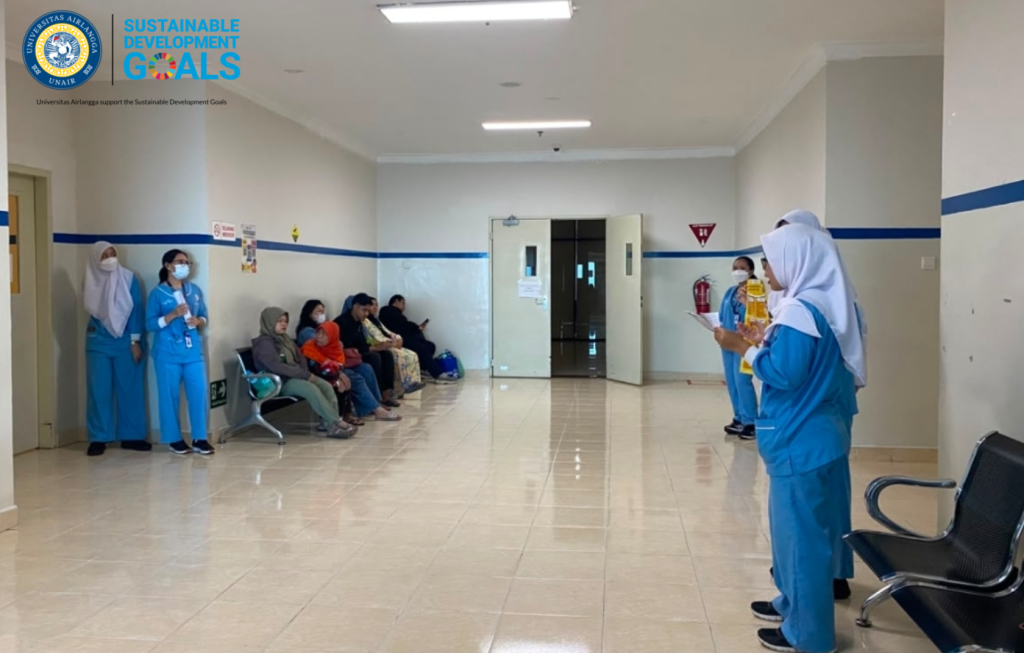
NERS NEWS — As part of efforts to improve families’ knowledge of newborn health, Nursing Professional Program students conducted a Hospital Health Promotion (PKRS) session titled “Recognizing Neonatal Jaundice: Hyperbilirubinemia in Newborns” on Friday, July 3, 2026, in the Level 5 PERINA Waiting Area. Attended by 11 participants, the educational session aimed to increase awareness of the recognition, prevention, and management of hyperbilirubinemia in newborns.
The PKRS session began with a presentation on hyperbilirubinemia, commonly known as neonatal jaundice, a condition frequently observed in newborn infants. The topics covered included the definition of hyperbilirubinemia, its causes, signs and symptoms, management, potential complications if left untreated, preventive measures, and available treatment options. The material was delivered using educational media in a communicative and engaging manner, enabling participants to better understand the information provided.
The educational activity took place on Friday, July 3, 2026, from 09:35 to 09:59 WIB in the Level 5 PERINA Waiting Area and was attended by 11 participants, consisting of parents and family members accompanying newborns receiving hospital care. Throughout the session, participants actively engaged in the discussion and asked various questions regarding the management of newborns experiencing jaundice.
The activity aimed to improve public knowledge, particularly among parents of newborns, regarding the importance of recognizing the early signs of hyperbilirubinemia so that timely treatment can be provided and complications can be prevented. This health education is expected to encourage families to seek medical attention promptly if their newborn shows signs of jaundice requiring professional care. The program also supports the Sustainable Development Goals (SDGs), particularly Goal 3 (Good Health and Well-Being), by promoting maternal and child health and preventing complications in newborns.
This PKRS activity supports the achievement of SDG 3: Good Health and Well-Being by increasing public awareness of the early detection, prevention, and management of hyperbilirubinemia in newborns.
Through this PKRS program, it is hoped that parents and family members will gain a better understanding of hyperbilirubinemia, enabling them to recognize its symptoms early, implement preventive measures, and seek immediate medical care when necessary. Continuous health education remains an essential strategy for improving the quality of healthcare services and ensuring the safety and well-being of newborns.
Writer: Group D2.3





