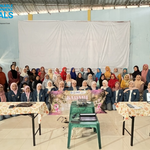
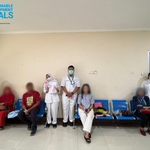
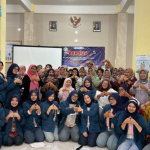
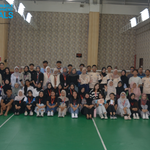
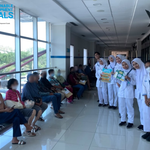
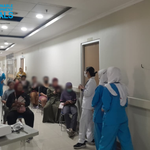
NERS NEWS — Students of the Nursing Profession Education Program, Group 3 Batch 49, Faculty of Nursing, Universitas Airlangga, successfully conducted a Hospital Health Education (PKRS) activity as part of the Basic Nursing Rotation at IRNA 4 Pediatrics, Universitas Airlangga Hospital, on Thursday, August 13, 2026. The activity, which began at 10:00 a.m., carried the theme “Protect Yourself from ARI, Keep Your Respiratory System Healthy” and was attended by approximately 15 participants consisting of patients’ family members. The activity was supervised by Wahyuni Tri Lestari, S.Kep., Ns., M.Kep., as the academic advisor and Widia Yuniarti, S.Kep., Ns., as the clinical supervisor of IRNA 4 Pediatrics.
The topic of ARI was selected due to the importance of improving families’ understanding of respiratory infections that commonly occur in children. ARI can cause symptoms such as coughing, runny nose, fever, and difficulty breathing, and in more severe cases may develop into pneumonia. Therefore, families’ knowledge of risk factors, signs and symptoms, and preventive measures is an important part of maintaining children’s health.
Before the activity, students carried out various preparations, including developing the topic and materials, consulting with academic and clinical supervisors, preparing the Health Education Session Plan (SAP), and developing educational media in the form of PowerPoint presentations and leaflets. Coordination with the ward nurses was also conducted to ensure that the activity could be carried out according to the participants’ conditions and needs.
The activity began with an opening, introductions, an explanation of the objectives, and an assessment of participants’ initial understanding of ARI. The presenters then delivered the educational materials through a lecture supported by PowerPoint and leaflets. The materials covered the definition, causes and risk factors, signs and symptoms, myths and misconceptions regarding prevention, ways to prevent ARI, and danger signs requiring immediate medical attention.

Participants were also educated about various ARI prevention measures that can be applied in daily life, such as maintaining hand hygiene, practicing proper cough and sneeze etiquette, maintaining environmental cleanliness and ventilation, avoiding cigarette smoke and pollution, and fulfilling children’s nutritional and fluid needs. Families were also guided to recognize danger signs such as difficulty breathing, rapid breathing, chest retractions, seizures, decreased consciousness, and inability to drink or breastfeed.
Following the presentation, the activity continued with a discussion and question-and-answer session. Participants were given the opportunity to ask questions and clarify information they did not fully understand. Participants’ enthusiasm and active involvement in the discussion served as part of the activity evaluation, along with their ability to answer questions and correctly demonstrate effective coughing techniques.
Through this PKRS activity, students hope that families will improve their knowledge and awareness of ARI prevention in children. The education provided is expected to be applied in daily life so that families can maintain their children’s respiratory health, recognize danger signs at an early stage, and promptly seek assistance from healthcare professionals if the child’s condition deteriorates.
Writer: Vica Febri Fajriani