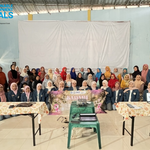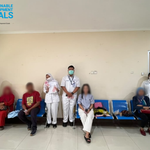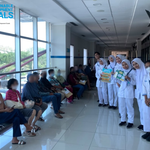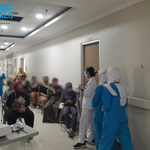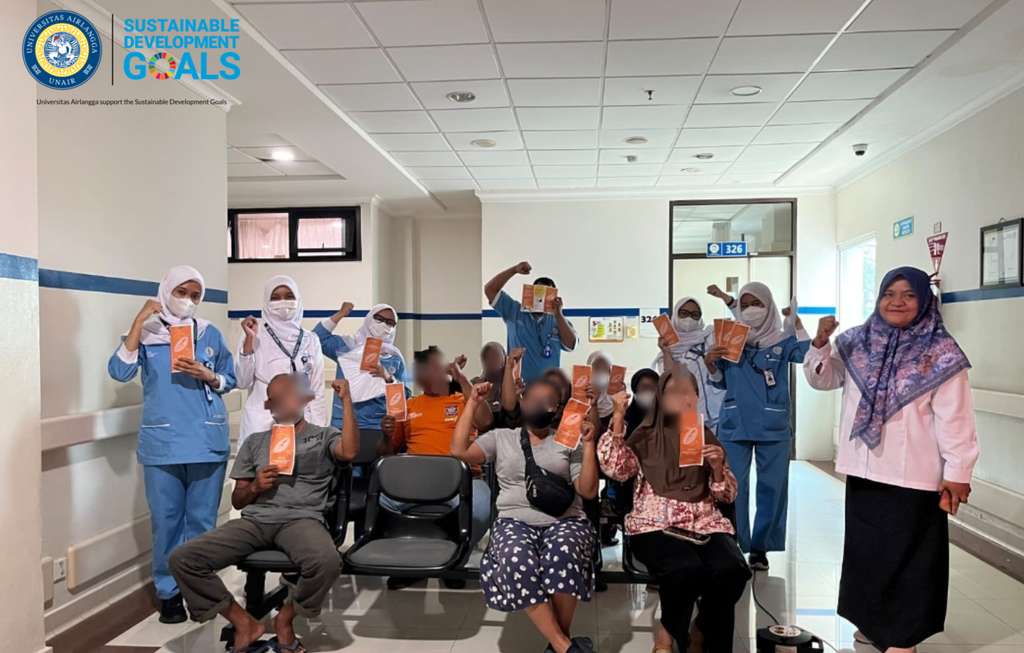
NERS NEWS — Students of the Nursing Professional Education Program, Faculty of Nursing, Universitas Airlangga, Group 5, conducted a Hospital Health Education (PKRS) activity on Friday, September 18, 2026, in the IRNA 3rd Floor Ward of Universitas Airlangga Hospital (RSUA). The activity focused on “Postoperative Infection Prevention” and targeted patients and their families in the IRNA 3rd Floor Ward of RSUA. The activity was conducted as part of a health education initiative to improve patients’ and families’ knowledge and behavior regarding postoperative infection prevention. This was in accordance with the SAP, which identified patients’ families in the IRNA 3rd Floor Ward of RSUA as the target group.
The PKRS activity aimed to help participants understand the definition of surgical site infection, the purpose of infection prevention, risk factors that increase the risk of surgical site infection, the importance of hand hygiene, signs and symptoms of surgical site infection, postoperative wound care, and ways to prevent surgical site infections at home. These objectives were in accordance with the specific instructional objectives outlined in the SAP.
The educational session used PowerPoint (PPT) presentations and leaflets, with lectures and question-and-answer sessions (brainstorming) as the methods. The materials covered the definition of surgical site infection, the purpose of infection prevention, infection risk factors, signs and symptoms of infection, postoperative wound care, and prevention of surgical site infection at home.
During the activity, the presenters explained that a surgical site infection is a condition in which a wound resulting from a surgical procedure becomes contaminated by microorganisms and can occur in both closed and open wounds. Participants were also provided with an understanding of several risk factors, including advanced age, poor nutritional status, obesity, diabetes mellitus, as well as factors related to surgical procedures and wound care.
The subsequent material discussed signs and symptoms of infection in surgical wounds, such as increasing pain, redness, warmth, swelling, and impaired function in the area surrounding the wound. Participants were also educated on the importance of washing their hands before and after touching or caring for a wound, changing dressings regularly, maintaining wound cleanliness, and performing wound care according to healthcare professionals’ recommendations.
During the discussion session, participants raised several questions regarding wound care. The first question was: “For diabetic wound care, does a specific solution need to be used, or can warm water alone be used?” The presenter explained that 0.9% NaCl can be used as a cleansing solution for wound care, while the use of other solutions should be adjusted according to the wound condition and the doctor’s recommendations. The SAP also explains that postoperative wound cleaning should be performed using sterile gauze moistened with 0.9% NaCl solution.
The second question was: “Why are patients with open wounds treated before those with closed wounds?” The presenter explained that open wounds are more susceptible to contamination and infection if they do not receive prompt and appropriate treatment, requiring proper attention and care. The SAP also explains that surgical site infections can occur in both closed and open wounds and emphasizes the importance of preventing contamination and providing appropriate wound care.
The activity continued with a question-and-answer session to evaluate participants’ understanding of the material presented. Based on the observation sheet, the health education session was generally conducted in accordance with the planned topic, objectives, target conditions, and educational media. Participants attended the session and participated in the question-and-answer session. The process evaluation in the SAP also established that participants were expected to pay attention to the material, actively ask questions or provide responses, and participate in an orderly manner.
According to the observation sheet, 12 participants attended the session, compared with the planned target of 15 participants. Although the number of participants did not reach the initial target, the activity was successfully conducted and proceeded well. Participants demonstrated engagement throughout the activity, including through the question-and-answer session regarding wound care.
The PKRS activity, “Postoperative Infection Prevention,” was conducted smoothly and successfully. Through this educational activity, participants are expected to understand the importance of maintaining hand hygiene, performing wound care according to healthcare professionals’ recommendations, recognizing the signs and symptoms of infection at an early stage, and promptly consulting healthcare professionals if signs of infection are found in a wound. The SAP also emphasizes the importance of follow-up examination if a wound becomes red, produces pus, swells, feels warm, or causes pain.
The PKRS activity was conducted by Group 5 students of the Nursing Professional Education Program, Faculty of Nursing, Universitas Airlangga, with assigned roles including moderator, presenter, facilitator, observer/timekeeper, documentation, and logistics and note-taking.
This report was prepared as documentation of the Hospital Health Education (PKRS) activity conducted in the IRNA 3rd Floor Ward of Universitas Airlangga Hospital.
Writer: Jihan Nadira Wardhani