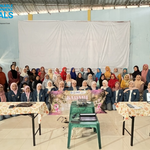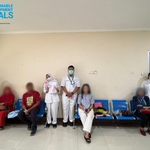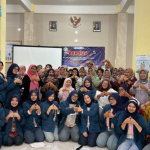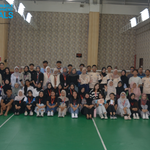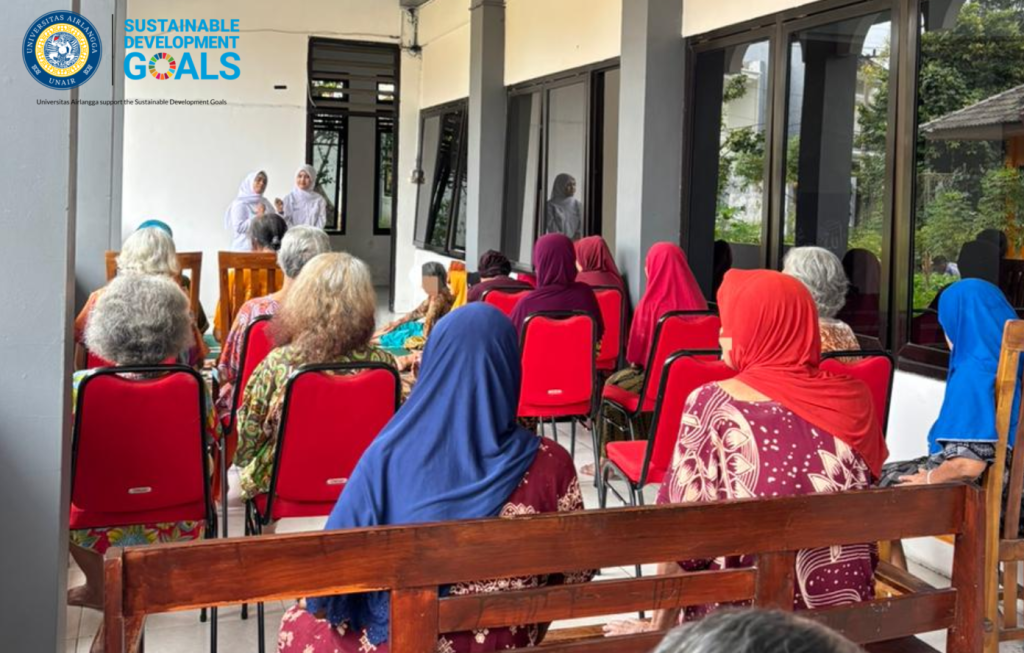
NERS NEWS – The atmosphere at UPTD Griya Werdha on Thursday, April 9, 2026, from 2:30 p.m. to 4:00 p.m. WIB was warmer and more cheerful with the implementation of a group activity therapy session in the form of beading. This activity was part of the clinical practice of nursing rotation students and aimed to train patience, improve concentration, and maintain fine motor skills among older adults.
This beading activity therapy introduced the concept of cognitive stimulation through a simple yet meaningful activity. During the session, the elderly participants were invited to arrange beads into bracelets or simple decorative items. This activity not only trained accuracy and patience but also provided joy and a sense of satisfaction after seeing the creations they had made.
In the main session, students first explained the objectives and benefits of beading activities for older adults, such as helping reduce boredom, improving focus, and maintaining hand-eye coordination. Participants were then guided gradually through the beading process, starting from choosing colors, threading beads, and arranging patterns according to their own creativity.
The activity was carried out in stages, beginning with an orientation phase to build rapport and create a sense of comfort with participants, followed by a demonstration of how to do beading, and ending with an evaluation phase through observation of the participants’ creations and interactions throughout the activity. In this program, students acted as facilitators by providing direct assistance, accompanied by clinical supervisor Ruci Navy Australian I, S.Kep., Ns., who provided guidance and support during the session.
Throughout the activity, the elderly participants appeared enthusiastic and enjoyed every stage of the process. One participant shared, “I am very happy to join this activity. It keeps me from feeling bored, helps train my patience, and makes me more focused.”
Through this activity, it is hoped that older adults can maintain optimal cognitive and motor functions while improving their quality of life through enjoyable activities. In addition, the program also served as a learning opportunity for students to develop their skills in providing promotive and rehabilitative activity therapy within healthcare service settings.
Writer: Refi Marshanda
Editor: Nandyta Putri Rahmadhani (Airlangga Nursing Journalist)