
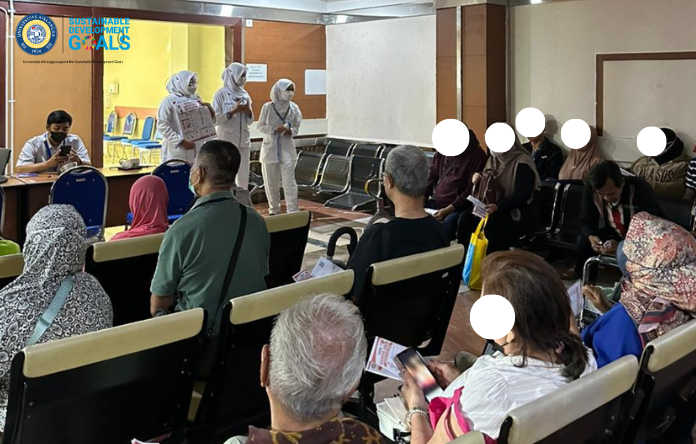
NERS NEWS — Students of the Professional Nursing Education Program, Group 9, Universitas Airlangga, conducted a Hospital Health Education (PKRS) activity as part of their Medical-Surgical Nursing clinical rotation on Thursday, August 27, 2026. Held at 7:30 a.m. Western Indonesia Time (WIB), the activity carried the theme “Recognize Hypertension, Prevent Heart Attacks Early” and targeted patients and visitors at the Graha Trimed Cardiology Clinic of Universitas Airlangga Hospital. The activity aimed to improve participants’ understanding of hypertension, its relationship with cardiovascular disease, and efforts to prevent heart attacks at an early stage.
The activity began with preparations by the students, including preparing leaflets as educational materials and arranging a time agreement with the participants. The students then invited patients and visitors to attend the health education session and guided them to participate in an orderly manner. Following the opening, introduction of group members, explanation of the objectives, and time agreement, the students began delivering the educational material on hypertension.
The materials covered the definition, types, risk factors, and signs and symptoms of hypertension. Participants were informed that hypertension is a condition characterized by elevated blood pressure that often does not cause specific symptoms, making regular blood pressure checks important for early detection. Factors that may increase the risk of hypertension include age, family history, obesity, stress, physical inactivity, smoking, and excessive consumption of salt and alcohol.
The students then explained the relationship between hypertension and heart attacks. Long-term uncontrolled hypertension can increase the workload of the heart and contribute to blood vessel damage. These conditions may increase the risk of atherosclerosis and impaired blood flow in the coronary arteries. Therefore, controlling blood pressure is an important step in maintaining cardiovascular health.
The material continued with a discussion of heart attacks, or acute myocardial infarction. Participants were informed that a heart attack is a medical emergency caused by impaired blood flow to the heart muscle. Warning signs include chest pain or discomfort that may feel like pressure, squeezing, heaviness, or tightness. These symptoms may be accompanied by shortness of breath, cold sweats, nausea, vomiting, dizziness, palpitations, or pain radiating to the arm, shoulder, back, neck, jaw, or upper abdomen.
The students also provided education on preventing heart attacks by controlling risk factors. Participants were encouraged to quit smoking, control blood pressure, blood glucose, and cholesterol levels, engage in regular physical activity, maintain a healthy diet, and undergo regular health check-ups. Several myths and facts about heart attacks were also discussed, including the fact that a heart attack does not always cause severe chest pain and can occur in people who are not elderly.
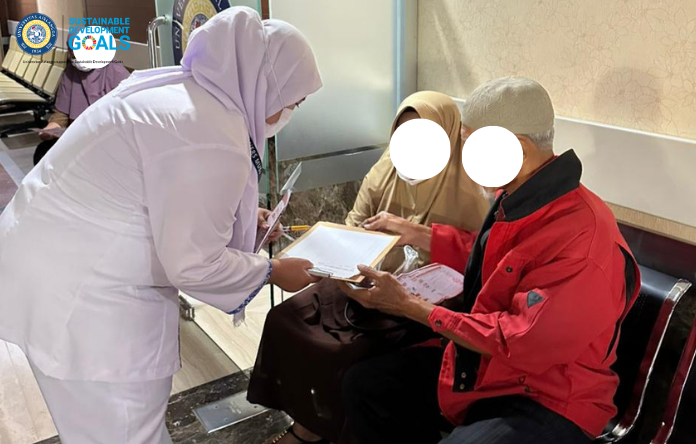
After the educational session, the activity continued with a question-and-answer session. Participants were given the opportunity to ask questions related to hypertension and heart attacks. The students then provided explanations and clarified information that participants had not fully understood. The session was conducted interactively, allowing participants to obtain information relevant to their individual needs.
An evaluation was conducted by asking several questions about the materials presented, including the definition of hypertension, its risk factors, the relationship between hypertension and heart attacks, and preventive measures. Through this evaluation, the students were able to assess the participants’ understanding after attending the health education session.
At the end of the activity, the students emphasized the importance of seeking immediate medical attention if persistent or recurrent chest pain or discomfort occurs, particularly when accompanied by shortness of breath, cold sweats, nausea, dizziness, weakness, or pain radiating to the arm, back, neck, or jaw. Participants were advised not to delay medical evaluation when experiencing symptoms that may indicate a cardiac emergency.
The PKRS activity concluded with a summary and a group documentation session with the participants. Through this activity, Group 9 students of the Professional Nursing Education Program at Universitas Airlangga hoped that participants would improve their understanding of hypertension, recognize its risk factors and warning signs, understand the relationship between hypertension and heart attacks, and adopt a healthy lifestyle and undergo regular health check-ups as part of efforts to maintain cardiovascular health.
Writer: Tania Nasywa Nabilah





