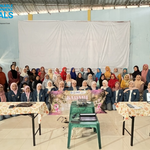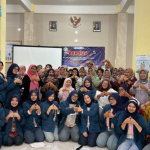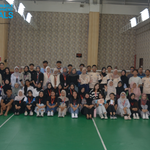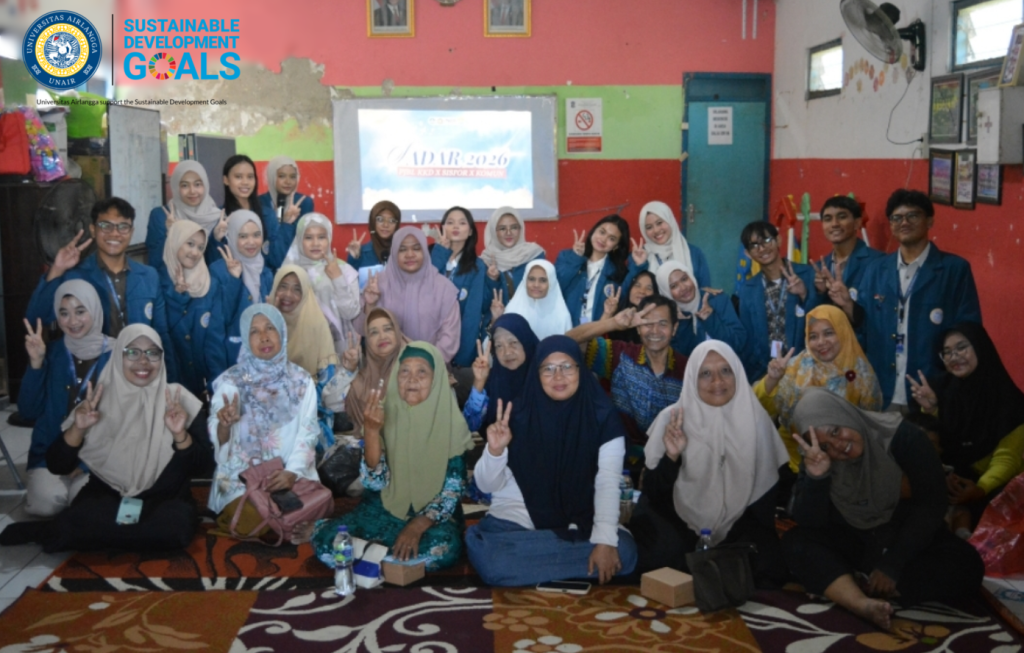
NERS NEWS — Students from the Faculty of Nursing, Universitas Airlangga (Unair), held a health education program titled “SADAR: Care for Yourself by Managing Diabetes Risks” at the RW 06 Community Hall, Dukuh Sutorejo, Surabaya. This activity was part of Project‑Based Learning (PjBL) integrated into the courses Adult Client Nursing, Health Information Systems in Nursing, and Community Nursing. Its purpose was to improve public knowledge and awareness regarding the prevention, control, and management of complications related to Type 2 Diabetes Mellitus (T2DM).
Activities included health education sessions, demonstrations on calculating Body Mass Index (BMI), daily calorie and sugar requirements, and interactive discussion sessions to actively engage all participants. The material covered the definition of diabetes mellitus, risk factors, early warning signs, complications, prevention strategies, management of hypoglycemia, and techniques for self‑monitoring blood glucose levels. Participants also learned how to calculate BMI and their daily calorie and sugar needs. Around 17 people took part in the program, comprising members of the Surabaya Hebat Community Health Cadre and members of the Family Welfare Movement (PKK) from RW 06, Dukuh Sutorejo. Held at the local community hall, this activity represented a form of community service by nursing students, applying health promotion and disease prevention approaches.
The program was initiated in response to the high prevalence of diabetes mellitus cases across Indonesia, including among residents of RW 06, Dukuh Sutorejo. Interviews conducted with local residents and community health cadres confirmed that several people in this neighborhood were living with diabetes. Furthermore, the activity was deemed necessary due to low levels of health literacy regarding diabetes management, unhealthy dietary habits including excessive consumption of sugary foods and beverages, and insufficient knowledge and skills in caring for diabetic wounds. Through the SADAR program, the students hoped to help community members recognize risk factors, undertake early detection, and adopt healthy lifestyles to prevent diabetes‑related complications. Integrating nursing information systems, the team also developed digital educational resources, such as informative posters and QR codes, which allow the community to access information about diabetes mellitus and its management measures anytime and anywhere. This innovation is expected to broaden equitable access to reliable health information and ensure long‑term benefits.
SADAR 2026 served as a collaborative learning platform focused specifically on Type 2 Diabetes Mellitus. “Please forgive us for any shortcomings in our presentation; we truly hope this shared learning experience about diabetes will be beneficial for all of you,” said Rijal Pangestu, Chairperson of the SADAR 2026 organizing committee. Meanwhile, Ibu Hartutik, one of the program participants, expressed her enthusiasm and appreciation, remarking that she would always remember the “Three J’s” principle for maintaining good health, which she learned during the session.
The SADAR program demonstrates the tangible contribution of the Faculty of Nursing, Universitas Airlangga, toward achieving the United Nations Sustainable Development Goals (SDGs). By enhancing community capacity to recognize, prevent, and manage diabetes mellitus, the activity directly supports SDG 3: Good Health and Well‑being, which prioritizes improving health outcomes and overall well‑being. The use of QR‑code‑based digital educational materials further advances SDG 4: Quality Education, by providing inclusive, accessible, and sustainable health information resources. Additionally, the active involvement of students, community health cadres, and local residents exemplifies strengthened multi‑stakeholder collaboration, fully aligning with SDG 17: Partnerships for the Goals.
Writer: Nurul Qomariyah
Editor: Nandyta Putri Rahmadhani (Airlangga Nursing Journalist)