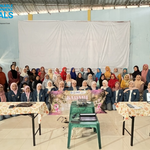
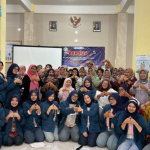
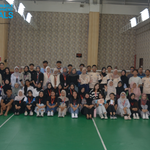
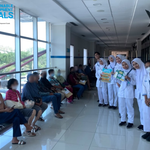
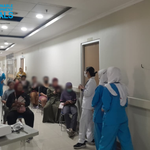
NERS NEWS — The Undergraduate Nursing Study Program of the Faculty of Nursing, Universitas Airlangga, held a Non-Alumni Guest Lecture entitled “Hospital Disaster Plan: Hospital Preparedness and Response to Disasters” on Thursday, August 27, 2026. The event featured Sutono, S.Kp., M.Sc., M.Kep., a lecturer from the Department of Basic and Emergency Nursing, Faculty of Medicine, Public Health, and Nursing, Universitas Gadjah Mada.
The event was officially opened by Vice Dean I, Dr. Sriyono, S.Kep., Ns., M.Kep., Sp.KMB, of the Faculty of Nursing, Universitas Airlangga. In his remarks, the Vice Dean I emphasized the importance of strengthening nursing students’ knowledge and competencies in dealing with disaster and emergency situations. As part of the healthcare workforce, nurses play a strategic role in maintaining patient safety and ensuring that healthcare services continue to operate when disasters lead to increased demand for healthcare services.
The guest lecture was also attended by the Head of the Study Program (KPS), Secretary of the Study Program (SPS), Quality Assurance Group (GPM), lecturers, and students of the Undergraduate Nursing Study Program. The participation of university leaders, study program administrators, quality assurance personnel, and students demonstrated a shared commitment to improving the quality of education, particularly in disaster and emergency nursing.

In his presentation, Ns. Sutono explained that hospitals are critical facilities that must remain safe, functional, and accessible before, during, and after disasters. Disasters can cause facility damage, a surge in the number of patients, logistical disruptions, shortages of healthcare personnel, and interruptions to essential healthcare services. Therefore, every hospital needs to have a clear, systematic, and implementable Hospital Disaster Plan.
Students also gained an understanding of Hazard Vulnerability Assessment, which is a process of identifying the threats, vulnerabilities, capacities, and risks faced by a hospital. The results of this analysis are used to determine risk priorities, develop mitigation strategies, and conduct continuous monitoring.
The discussion also covered human resource management, the availability of medicines and medical equipment, personal protective equipment, oxygen, clean water, fuel, crisis communication, evacuation procedures, and Continuity of Operations to ensure that hospitals can continue operating. Following a disaster, hospitals need to restore healthcare services, rehabilitate healthcare personnel and facilities, provide psychosocial support, and conduct an After Action Review as a basis for improving preparedness systems in the future.

Through this activity, students are expected not only to understand the concepts of hospital disaster management but also to identify nurses’ roles in command systems, triage, evacuation, communication, resource management, psychosocial support, and continuity of healthcare services. A resilient hospital is built through a combination of safe facilities, functional systems, and prepared and competent human resources.
This activity supports the achievement of the Sustainable Development Goals, particularly SDG 3: Good Health and Well-Being through strengthening healthcare preparedness; SDG 4: Quality Education through learning from experts; SDG 11: Sustainable Cities and Communities through the development of safe and disaster-resilient healthcare facilities; SDG 13: Climate Action through improving preparedness for disasters associated with climate change; and SDG 17: Partnerships for the Goals through academic collaboration between Universitas Airlangga and Universitas Gadjah Mada.
Writer: Dr. Iqlima Dwi Kurnia, S.Kep., Ns., M.Kep.