
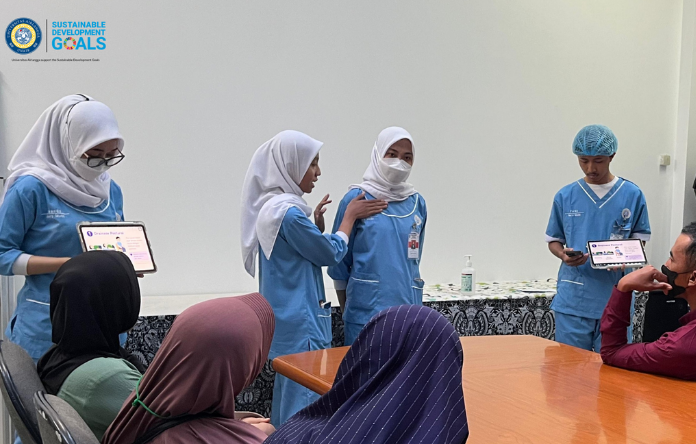
NERS NEWS— Surabaya, August 27, 2026 – Group 2, S2 Nursing Professional Education Program Cohort 48, Faculty of Nursing, Universitas Airlangga, conducted a health education session on chest physiotherapy for patients’ families in the Neuro ICU waiting room at Dr. Soetomo Regional General Hospital, Surabaya, on Thursday, August 27, 2026. The activity was held from 10:30 to 11:00 a.m. Western Indonesia Time (WIB), carrying the theme “Chest Physiotherapy to Help Maintain Airway Clearance and Improve Respiratory Function.”
The activity aimed to improve families’ understanding of chest physiotherapy and its proper application in supporting patient care. The activity was conducted under the guidance of Erna Dwi Wahyuni, S.Kep., Ns., M.Kep., as the academic supervisor, and Septi Kurniasih, S.Kep., Ns., as the clinical supervisor.
The team opened the activity with greetings, introductions, an explanation of the objectives, and an overview of the materials to be presented. Vera Niken Wulandari facilitated the activity from the opening through the delivery of the educational materials. The team then presented the materials through lectures and demonstrations, supported by leaflets and PowerPoint (PPT) presentations.
The materials were delivered by Mohammad Ferdy Arrosyd and Elya Arundati. They explained the definition and purpose of chest physiotherapy, as well as several techniques that can be used, including percussion or clapping, vibration, postural drainage, and effective coughing. The team also conducted demonstrations to help families understand the appropriate techniques and positions for performing chest physiotherapy.
The health education session not only discussed the benefits and techniques of chest physiotherapy but also emphasized safety considerations during its implementation. The team explained that chest physiotherapy should be adapted to the patient’s condition and performed according to healthcare professionals’ guidance. Families were also advised to immediately stop the procedure and report to healthcare professionals if the patient experienced shortness of breath, chest pain, decreased consciousness, bleeding, or sudden changes in condition.
During the session, Lintang Prameswari helped monitor the activity and accompanied participants throughout the educational process. She also recorded the discussion and helped ensure that participants could follow the materials effectively. Meanwhile, Nanda Durroti El Jaudah assisted with managing the activity schedule, accompanying participants, and documenting the health education session.
The patients’ families participated enthusiastically and responded positively throughout the session. Participants were given opportunities to ask questions and discuss the materials presented. The team then conducted an evaluation to assess the participants’ understanding. The evaluation results indicated that the families were able to understand and appropriately demonstrate chest physiotherapy techniques.
This educational activity represented one of the students’ contributions to supporting the achievement of the Sustainable Development Goals (SDGs). Education on chest physiotherapy supports SDG 3: Good Health and Well-being by improving families’ knowledge of respiratory health and encouraging their involvement in supporting patient care. The activity also aligns with SDG 4: Quality Education, as the students provided applicable health education through presentations, demonstrations, and discussions.
Through this activity, the students also encouraged families to better understand their role in the patient care process. The education provided is expected to serve as useful knowledge for families in supporting patients’ airway clearance and respiratory function safely and appropriately, in accordance with healthcare professionals’ guidance.
Writer: Group 2, S2 Critical Care, Emergency, and Disaster Nursing Clinical Rotation, Nursing Professional Education Program Cohort 48, Faculty of Nursing, Universitas Airlangga





