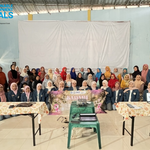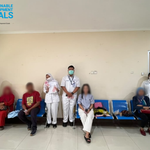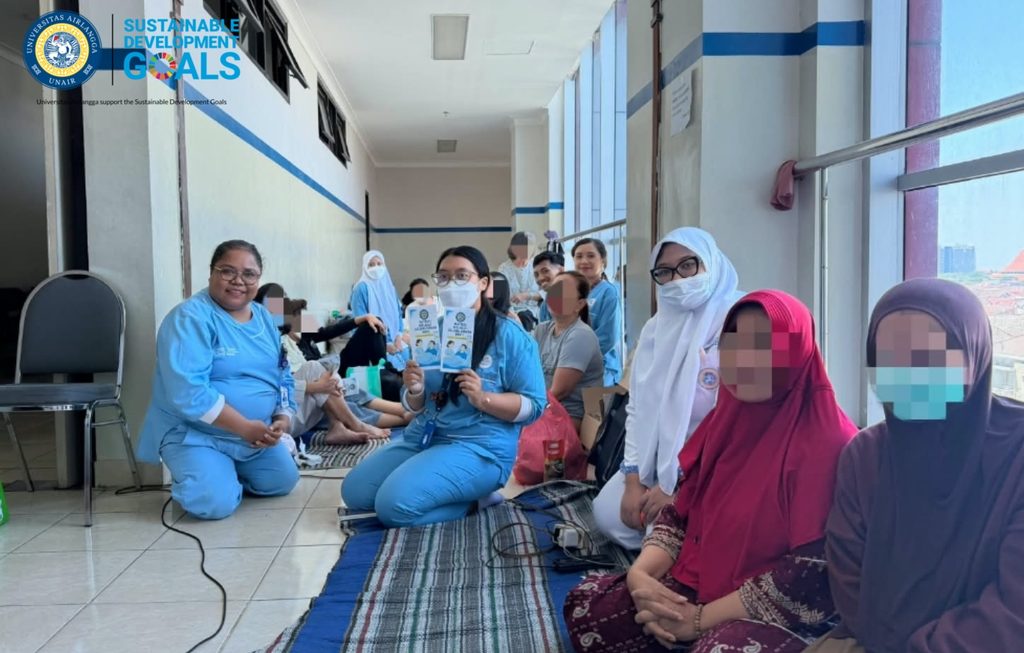
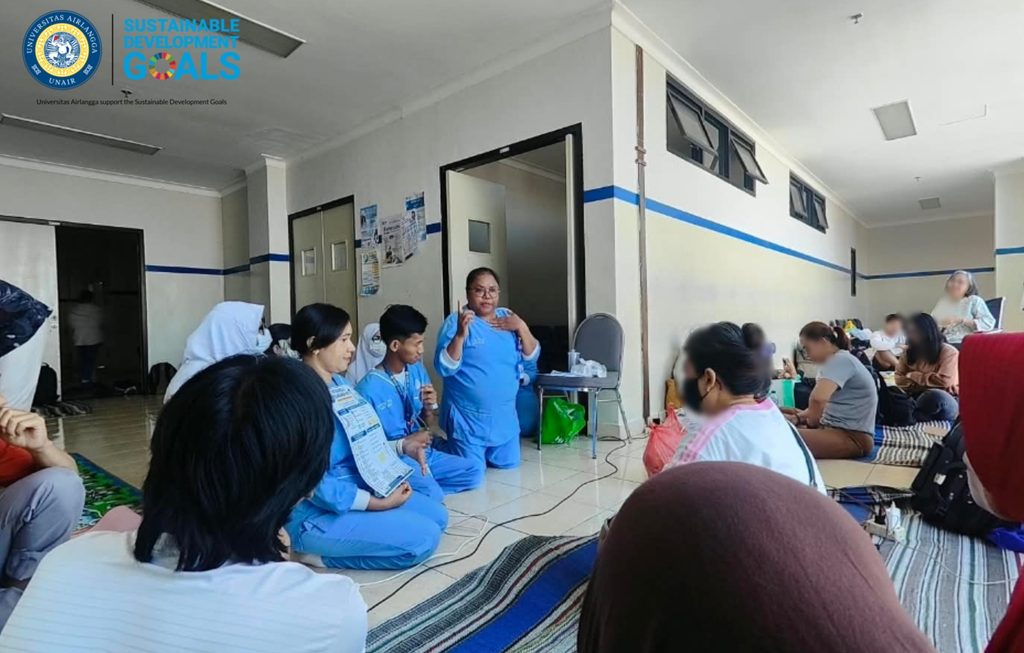
NERS NEWS — Group 4 students of the Nursing Profession Education Program, Faculty of Nursing, Universitas Airlangga, Batch 2026, successfully conducted a health education activity with the theme “The Importance of Nutrition and How to Provide Nutrition through a Feeding Tube” on Thursday, September 3, 2026, from 10:00–10:30 a.m. WIB in the ICU Waiting Room of Universitas Airlangga Hospital. This activity was part of the Nursing Profession Education Program practice of the Faculty of Nursing, Universitas Airlangga, in collaboration with the Hospital Health Promotion (PKRS) Team of Universitas Airlangga Hospital.
The activity was attended by patients’ families in the ICU Waiting Room of Universitas Airlangga Hospital. The health education was conducted through lectures and question-and-answer sessions using leaflets and posters as educational media. This activity aimed to increase families’ understanding of the importance of fulfilling patients’ nutritional needs and how to safely provide nutrition through a feeding tube.
During the health education, the presenter explained that nutrition consists of substances needed by the body to produce energy, support growth and development, repair tissues, maintain organ function, and help improve the body’s immunity. In patients who are ill, fulfilling nutritional needs becomes increasingly important because the body requires energy and building materials to support the healing process.
The material also discussed the consequences that can occur when nutritional needs are not met, such as the body becoming weak and easily fatigued, weight and muscle mass loss, decreased immunity, increased risk of infection, and a longer healing process. Therefore, fulfilling nutritional needs is an important part of patient care, including for patients who are not yet able to eat and drink orally.
Next, participants received education about nutrition through a feeding tube or enteral nutrition, namely the administration of nutrients in liquid form through a tube into the stomach or intestines. One of the commonly used tubes is an NGT (Nasogastric Tube) or nasogastric tube. The use of a feeding tube can be performed in patients with difficulty swallowing, decreased consciousness, impaired chewing or swallowing ability, or patients who are unable to meet their nutritional needs orally.
The presenter also explained the steps that need to be considered before and during the administration of nutrition. Families need to maintain hand hygiene, ensure that the type and amount of nutrition are in accordance with the recommendations of healthcare professionals, and maintain the patient’s position with the head of the bed elevated at approximately 30–45°. Nutrition should be administered slowly according to the instructions of healthcare professionals, and the patient’s condition should be continuously monitored throughout the process.
Families were also reminded to pay attention to various signs of problems during the administration of nutrition, such as coughing, choking, shortness of breath, nausea, vomiting, severe abdominal bloating, or the patient appearing uncomfortable. If these complaints occur, nutrition administration should be temporarily stopped and immediately reported to healthcare professionals. Families are also advised not to administer nutrition if the safety of the tube’s position cannot be confirmed or if the tube appears to have shifted.
Participants’ enthusiasm was evident throughout the activity. Participants followed the health education session orderly and were given the opportunity to ask questions about providing nutrition through a feeding tube and the things that need to be considered to maintain patient safety. This activity is expected to help families understand their role in supporting patients’ nutritional needs according to the instructions of healthcare professionals.
Through this activity, patients’ families are expected to understand the importance of nutrition, know how to safely provide nutrition through a feeding tube according to the instructions of healthcare professionals, maintain the patient’s position during and after nutrition administration, and recognize warning signs that need to be immediately reported to healthcare professionals.
SDG Integration
SDG 3: Good Health and Well-Being
Writer: Yasmin Adlina Dhiyavia