
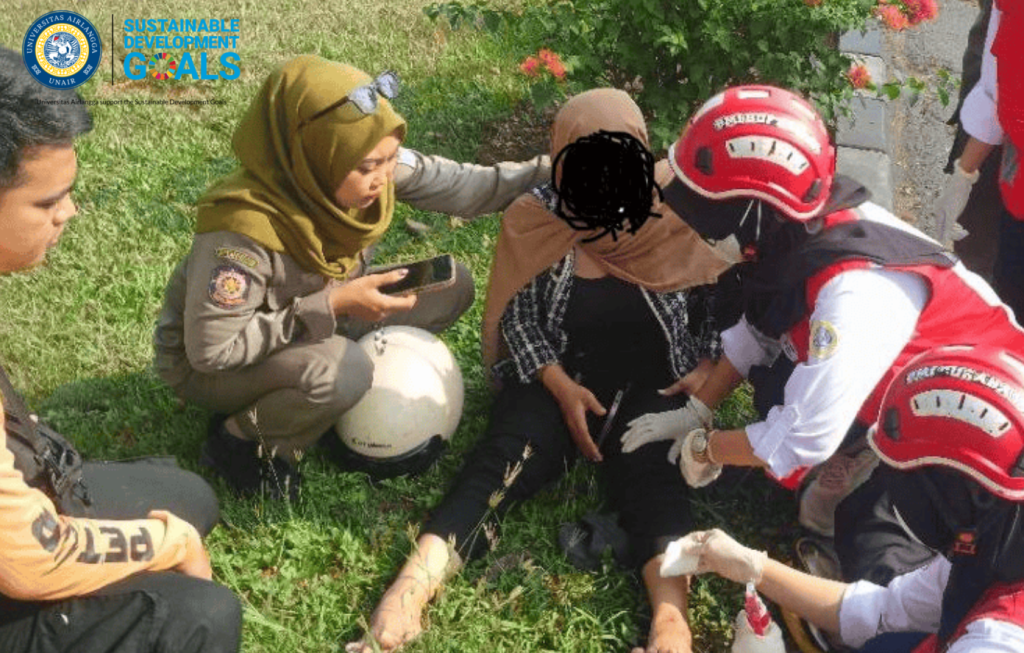
Photo: PMI Archive
NERS NEWS — The Indonesian Red Cross (PMI) Surabaya City organizes the 24-Hour Ambulance Response Program as a concrete form of humanitarian service for the community. This program operates continuously every day and is stationed at the PMI Surabaya Headquarters, involving 12–13 personnel per day divided into three shifts to ensure a rapid response to every medical emergency call received from Command Center 112.
Two nursing students, Adinda Putri and Arnisa Miftachul Rizki, both regular students from the 2023 cohort, have been actively involved in this humanitarian mission from July 2024 until the present. During the program, the students work alongside PMI Surabaya personnel in the 24-hour ambulance standby service, which is organized into three daily shifts. Their responsibilities include checking the completeness of first aid equipment and ambulance facilities, monitoring calls from Command Center 112, and directly assisting in handling various emergency cases such as traffic accidents, fires, body evacuations, and other medical emergencies across different areas of Surabaya.
Their participation represents a tangible effort in developing students’ professional capacity, particularly in the health sector. Through this program, students are required to make quick and accurate decisions, such as determining appropriate referral hospitals for patients. In addition, they are trained to respond promptly and effectively in handling emergency cases. The activity also allows students to continuously practice therapeutic communication and multidisciplinary collaboration in real situations. The program involves cooperation with multiple stakeholders, including the Regional Disaster Management Agency (BPBD), Public Order Agency (Satpol PP), the police, TGC Surabaya, hospitals, and in certain cases also requires assistance from INAVIS and DPKP.
As students, supporting the Sustainable Development Goals (SDGs) is essential. This activity aligns with SDG 3 (Good Health and Well-Being) by supporting equitable and free access to emergency health services for all members of the community, as well as SDG 17 (Partnerships for the Goals) through collaboration between educational institutions, PMI, community sectors, and the city government in delivering humanitarian services.
Writer: Arnisa Miftachul Rizki
Editor: Nandyta Putri Rahmadhani (Airlangga Nursing Journalist)





