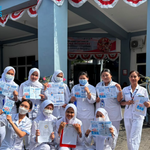
NERS NEWS — On Tuesday, June 9, 2026, students of the Faculty of Nursing, Universitas Airlangga, Group 2, Class A2, Cohort 2024, conducted an integrated Project Based Learning (PjBL) activity in Adult Client Nursing, Community Nursing Concepts, and Nursing Information Systems under the theme “SIGAP 2026 (Alert and Responsive to Gastritis in Mothers)” at the RW 12 Community Hall, Jl. Jojoran III No. 144, Mojo, Gubeng District, Surabaya. This activity was a form of community service aimed at increasing public knowledge and awareness regarding the prevention and management of gastritis through promotive and preventive approaches.
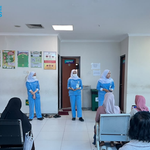
The activity began with participant registration, followed by simple health examinations in the form of blood pressure measurements and uric acid level checks. These examinations were conducted as an effort toward the early detection of community health conditions while also increasing participants’ awareness of the importance of regular health check-ups. In addition to providing an overview of the participants’ health conditions, this activity also served as an educational opportunity that dietary habits, physical activity, stress levels, and daily lifestyle play important roles in maintaining overall health, including digestive system health.

After the series of health examinations was completed, the activity continued with the opening ceremony, welcoming remarks from various parties, and the administration of a pre-test to measure participants’ initial knowledge regarding gastritis and GERD. Subsequently, participants received health education as part of the SIGAP 2026 (Alert and Responsive to Gastritis in Mothers) program, covering the definition of gastritis (stomach ulcers), causes, risk factors, signs and symptoms, types of gastritis, the mechanism of gastritis, the relationship and differences between gastritis and Gastroesophageal Reflux Disease (GERD), prevention, recommended and restricted foods, simple management when gastritis recurs, and the dangers of complications that may occur if these conditions are not properly managed.
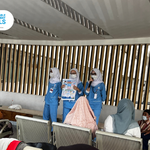
The educational materials were delivered interactively through presentations, leaflets, educational videos, discussions, and question-and-answer sessions. During this session, participants were encouraged to understand the importance of maintaining regular eating patterns, managing stress effectively, adopting a healthy lifestyle, and avoiding various habits that may trigger gastritis or GERD. Through a communicative and easy-to-understand educational approach, participants appeared enthusiastic throughout the activity and actively shared experiences and asked questions related to gastric complaints commonly experienced in daily life.
In addition to the educational session, participants also took part in various interactive activities aimed at reinforcing their understanding of the materials presented. Through these activities, participants were encouraged to identify foods recommended and to be avoided for individuals with gastritis and to understand the importance of implementing a healthy lifestyle in daily life. These interactive activities also created an enjoyable learning atmosphere, enabling participants to understand and remember the information more easily.
As a form of direct practice, participants joined a demonstration of deep breathing relaxation techniques in a seated position as a non-pharmacological effort to help reduce discomfort when gastritis recurs. Through this demonstration, participants were taught the correct way to perform breathing exercises to help the body become more relaxed, reduce stress, and improve comfort when experiencing gastric complaints. Participants were also given the opportunity to practice these techniques directly so that they could apply them independently in their daily lives.

The community’s enthusiasm was evident throughout the activity through active participation in discussion sessions, question-and-answer sessions, and interactive activities organized by the committee. Based on the evaluation results through the pre-test and post-test, there was an improvement in participants’ understanding of gastritis, GERD, risk factors, prevention, simple management when symptoms occur, and the importance of adopting a healthy lifestyle to maintain gastric health.
The SIGAP 2026 activity also supported the achievement of the Sustainable Development Goals (SDGs), particularly SDG 3 (Good Health and Well-Being) through promotive and preventive efforts to increase public knowledge regarding gastritis and GERD and encourage the adoption of healthy lifestyles. In addition, this activity contributed to SDG 4 (Quality Education) through the provision of interactive and easily understood health education for the community, as well as SDG 17 (Partnerships for the Goals) through collaboration among students, lecturers, and the community in promoting improved community health.
Through the SIGAP 2026 activity, it is hoped that the community of RW 12, Mojo Village, Gubeng District, Surabaya, will become increasingly aware of the importance of maintaining digestive system health, adopting healthy lifestyles, undergoing regular health check-ups, and recognizing and preventing factors that may trigger gastritis from an early stage. In this way, the community can play an active role in continuously improving the health status of themselves, their families, and their environment.

Writer: Dwi Ratih Yuanita
Editor: Nandyta Putri Rahmadhani (Airlangga Nursing Journalist)