
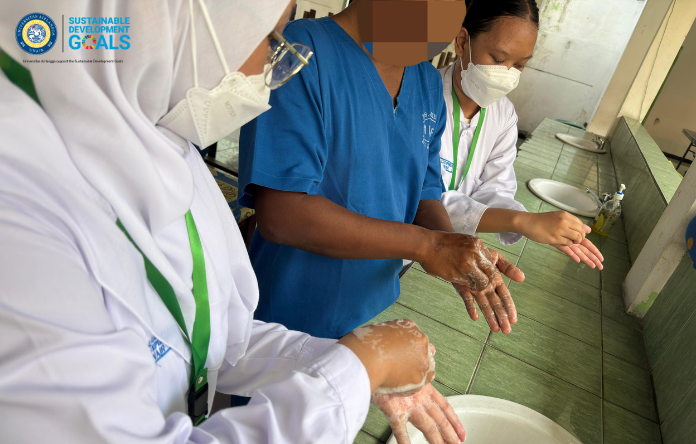
NERS NEWS – on the correct six-step handwashing practice according to the World Health Organization (WHO) with patients at Gelatik Ward of Menur Mental Hospital, Surabaya, on Wednesday, March 4, 2026. This activity aimed to increase patients’ awareness of the importance of hand hygiene as an effort to prevent infections through direct practice and simple, interactive guidance.
The educational activity was carried out by providing an explanation about the importance of hand hygiene and demonstrating the six-step handwashing practice according to WHO standards. Patients were invited to practice each step directly, starting from rubbing the palms, the backs of the hands, between the fingers, to the fingertips and wrists using soap and running water. The educational approach was conducted interactively so that patients could more easily understand and remember the steps.
This activity involved student interns from the Faculty of Nursing, Universitas Airlangga, together with patients who were undergoing treatment in Gelatik Ward. The education session was conducted at Menur Mental Hospital, Surabaya, on Wednesday, March 4, 2026, as part of psychiatric nursing clinical practice activities. During the activity, students provided direct assistance to patients so they could practice proper handwashing techniques.
This activity aimed to improve patients’ knowledge and skills in maintaining personal hygiene, particularly hand hygiene, which is one of the simplest yet most effective ways to prevent the spread of diseases. In addition, this educational activity also supports efforts to improve clean and healthy living behaviors within the hospital environment. This activity represents a form of support toward achieving the Sustainable Development Goals (SDGs), particularly in improving public health and well-being.
One of the students involved in the activity stated that health education like this is important to continue so that patients can independently apply clean and healthy living behaviors. “Through direct practice, patients can more easily understand the correct steps of handwashing so that it can become a daily habit,” the student said.
This activity supports the achievement of several Sustainable Development Goals (SDGs), namely:
SDG 3: Good Health and Well-Being
Improving health through infection prevention and the implementation of clean and healthy living behaviors.
SDG 4: Quality Education
Providing health education to patients as part of improving health literacy.
Through this six-step handwashing education activity, patients are expected to understand and apply proper hand hygiene practices in their daily lives. This activity also represents the contribution of students and educational institutions in improving public health quality and supporting the achievement of sustainable development goals.
Author: Artika Rizkafani
Editor: Eva Khoirunnisa Adinta (Airlangga Nursing Journalist)





