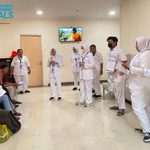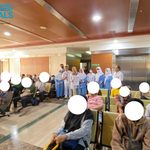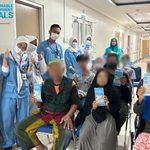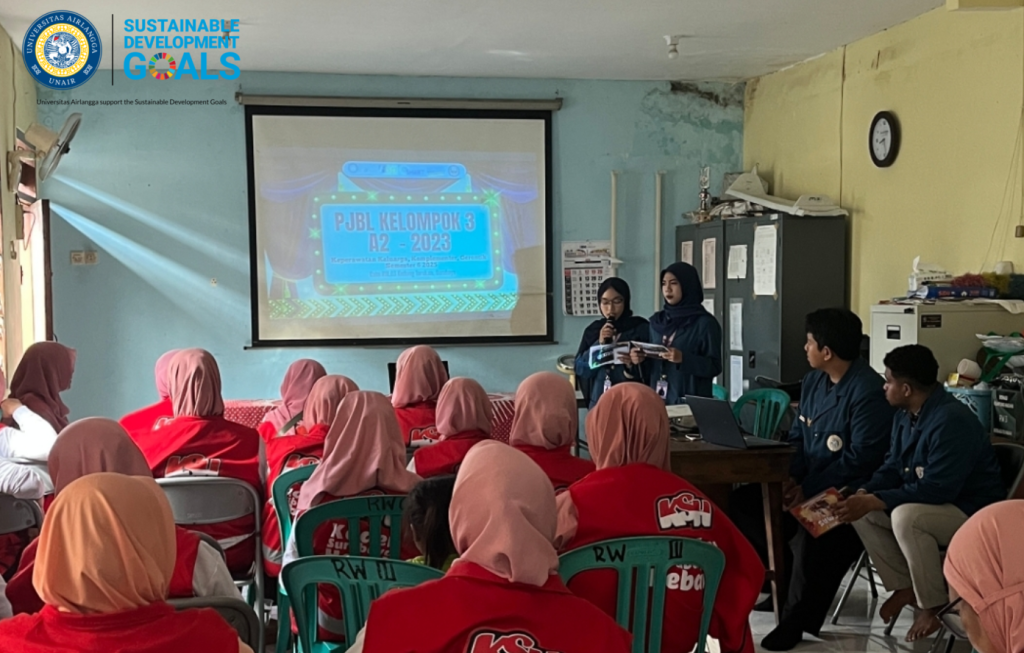
NERS NEWS — Students of Class A2 Cohort 2023 from the Faculty of Nursing, Universitas Airlangga carried out a Project Based Learning (PjBL) activity through the SENADA Program (Healthy Joints through Physical Activity as well as Honey and Ginger) at the RW 03 Community Hall in Kedung Tarukan, Surabaya. This activity aimed to empower families and older adults in preventing joint inflammation through health education, physical activity, and the utilization of ginger and honey as complementary therapy.
The SENADA Program began with a pre-test activity to assess participants’ knowledge regarding joint inflammation. Subsequently, the students provided education related to the definition, types, risk factors, signs and symptoms, as well as preventive measures for joint inflammation. The activity was also complemented by a demonstration of active movement supportive therapy and the presentation of a video on preparing a honey-ginger beverage that can be utilized as a complementary therapy to maintain joint health.
The activity, which was conducted on Friday, April 24, 2026, involved families and older adults, namely Surabaya Hebat Cadres in the RW 03 Kedung Tarukan area of Surabaya, as the primary targets of the program. Through the Project Based Learning (PjBL) approach, participants not only received educational materials but were also actively involved in discussions, question-and-answer sessions, and simple practices that could be independently applied at home.
The SENADA Program was organized in response to the high prevalence of musculoskeletal problems, particularly joint inflammation among older adults, which can reduce quality of life and independence. Through the empowerment of families and older adults, this program is expected to enhance public knowledge regarding the prevention of joint inflammation, encourage the regular implementation of physical activity, and increase the utilization of natural ingredients such as ginger and honey as supportive measures for joint health.
In addition to providing health education, this activity also served as a means for students to implement project-based learning oriented toward solving health problems within the community. Collaboration among students, families, and older adults is expected to create an environment that supports healthy aging and improves the quality of life of the elderly population.
The implementation of the SENADA Program is in line with efforts to achieve the Sustainable Development Goals (SDGs), particularly SDG 3 (Good Health and Well-Being) through the improvement of the health and well-being of older adults, SDG 4 (Quality Education) through community-based health education, and SDG 17 (Partnerships for the Goals) through collaboration between educational institutions and communities in realizing sustainable health development.
Through this activity, it is hoped that families and older adults will be able to apply the knowledge they have gained in their daily lives so that they can prevent joint inflammation independently and sustainably. The SENADA Program is one manifestation of the commitment of students of the Faculty of Nursing, Universitas Airlangga in supporting the improvement of community health through education, empowerment, and community-based innovation.
Writer: Sandrina Humairah