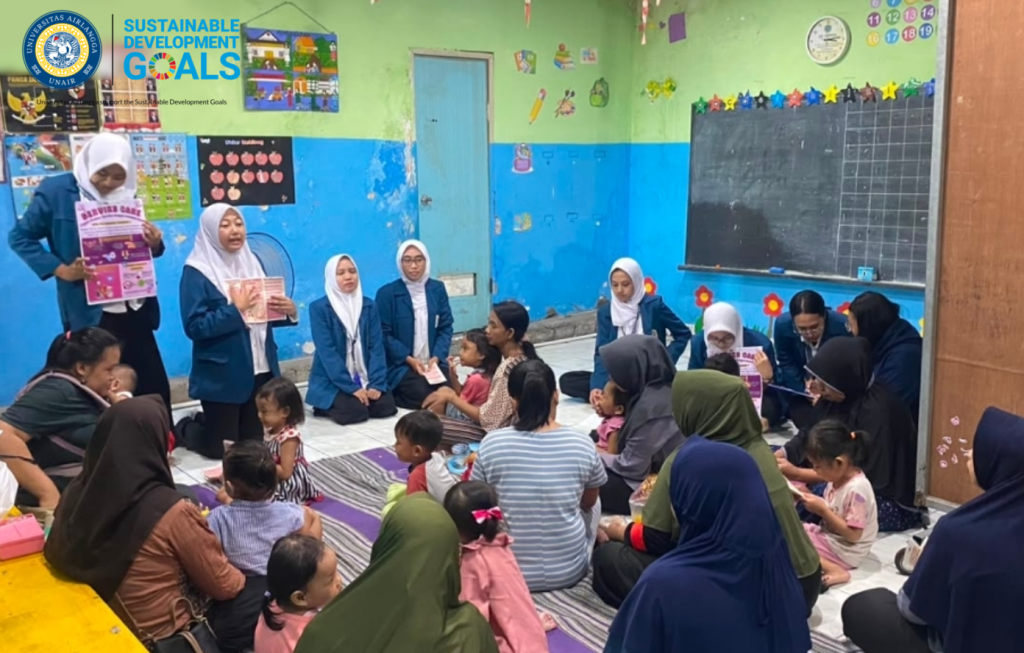
NERS NEWS — Nursing Professional Education Program students from Universitas Airlangga, specifically the Gerontic Nursing rotation group, conducted a health education session entitled “Serviks Care: Prevent, Recognize Symptoms, Get Regular Screening, and Educate” on Thursday, August 6, 2026, in RW 04 Klampis Ngasem, Surabaya. The activity aimed to increase participants’ knowledge of cervical cancer, its risk factors and symptoms, the importance of early detection, and preventive measures to reduce morbidity and mortality caused by cervical cancer.
The health education session focused on increasing participants’ understanding of cervical cancer as one of the types of cancer that commonly affects women. The materials covered the definition of cervical cancer, its primary cause associated with Human Papillomavirus (HPV) infection, risk factors, signs and symptoms, and the importance of early detection through Visual Inspection with Acetic Acid (VIA) and Pap smear examinations according to healthcare professionals’ recommendations.
In addition to discussing early detection, participants received education on various cervical cancer prevention measures, including maintaining reproductive organ hygiene, adopting a healthy lifestyle, avoiding risky sexual behavior, not smoking, and the importance of HPV vaccination as a primary prevention measure. The education was delivered using presentation materials and leaflets to make the information easier for participants to understand.
The activity was facilitated by Nursing Professional Education Program students from Universitas Airlangga under the guidance of clinical supervisors and Surabaya Hebat cadres. Throughout the session, participants showed great enthusiasm by actively participating in discussions and asking various questions about early detection examinations, symptoms that should be watched for, and preventive measures that could be taken.
The health education session was expected to increase public awareness of the importance of undergoing regular cervical cancer screening. With earlier diagnosis, the chances of successful treatment are higher, allowing women to maintain their quality of life and minimizing the risk of complications.
A representative of the management of Griya Wreda Jambangan Surabaya expressed that the cervical cancer education was highly beneficial for the participants. “Through this health education session, participants received accurate information about cervical cancer and the importance of early detection. We hope that this knowledge will increase their awareness of maintaining reproductive health and undergoing regular examinations,” she said.
This activity supported several Sustainable Development Goals (SDGs), including:
- SDG 3: Good Health and Well-Being — The health education session contributed to improving community health by providing education on cervical cancer prevention and early detection. Increased knowledge is expected to encourage people to undergo regular health examinations, allowing diseases to be detected earlier and treated appropriately.
- SDG 4: Quality Education — The session served as a form of health education that provided the community with scientifically based information about cervical cancer and the importance of early detection. This education supports lifelong learning by improving the community’s ability to maintain their health independently.
Through this health education session, participants are expected to gain a better understanding of the importance of early cervical cancer detection as an effective preventive measure. Continuous health education is expected to increase public awareness of the importance of regular screening, adopting a healthy lifestyle, and supporting the achievement of the Sustainable Development Goals in the fields of health and education.
Writer: Adinda