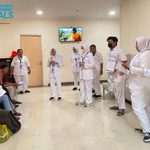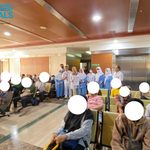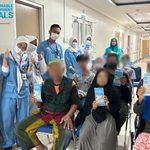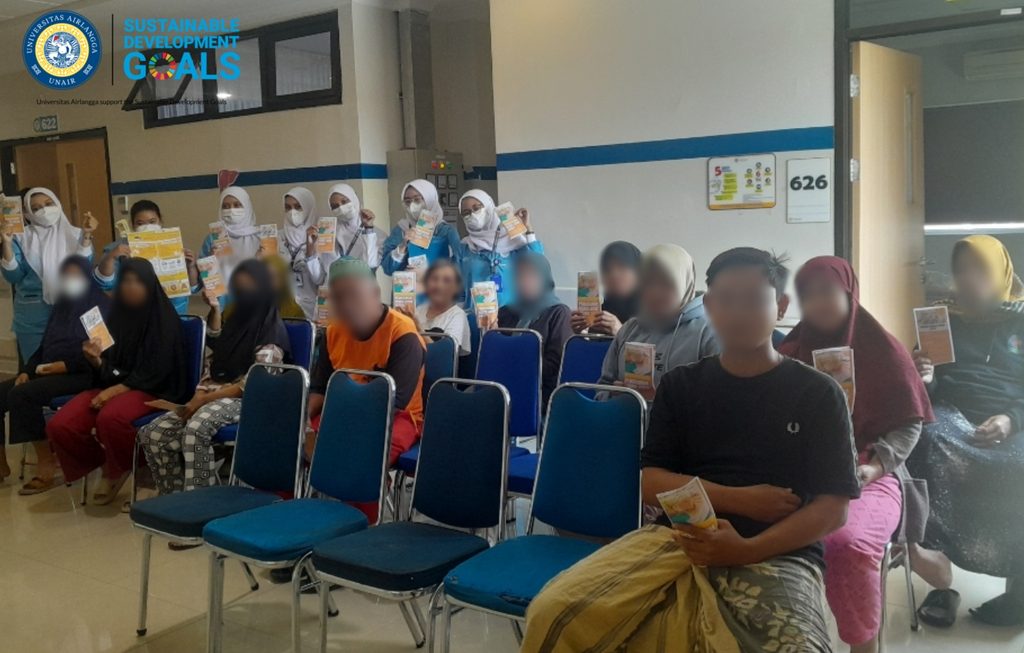
NERS NEWS — Surabaya, August 21, 2026 — Students of the Nursing Professional Education Study Program, Faculty of Nursing, Universitas Airlangga, conducted a Hospital Health Education (PKRS) activity with the theme “The Role of Families in Preventing Fall Risks in Hospitalized Patients” at IRNA 6, Universitas Airlangga Hospital (RSUA), on Friday (August 21). Beginning at 10:00 a.m. Western Indonesia Time (WIB), the activity aimed to increase family knowledge and involvement in preventing fall risks and creating a safer care environment for patients.
The PKRS activity was part of the Ners Professional Practice in the Basic Nursing Professional Rotation (PKD), conducted by students from Group 6, Cohort A49. Through this activity, students provided education on the definition of falls and fall risks, intrinsic and extrinsic risk factors, the impact of falls on patients’ conditions, and preventive measures that can be implemented while patients are receiving care. The material was delivered through lectures, demonstrations, discussions, and question-and-answer sessions using PowerPoint presentations and leaflets.
The activity was conducted in IRNA 6, Universitas Airlangga Hospital, involving Ners Professional students as educators and patients and their families as participants. In delivering the material, the students emphasized that families are important partners in maintaining patient safety. Families can help monitor patients’ conditions, ensure that the surrounding environment remains safe, assist with mobilization according to the patient’s condition, and immediately contact healthcare workers if they identify conditions that may increase the risk of falls. Several factors that may increase fall risk include physical weakness, impaired balance, decreased level of consciousness, the use of walking aids, medication effects, and an unsafe environment.
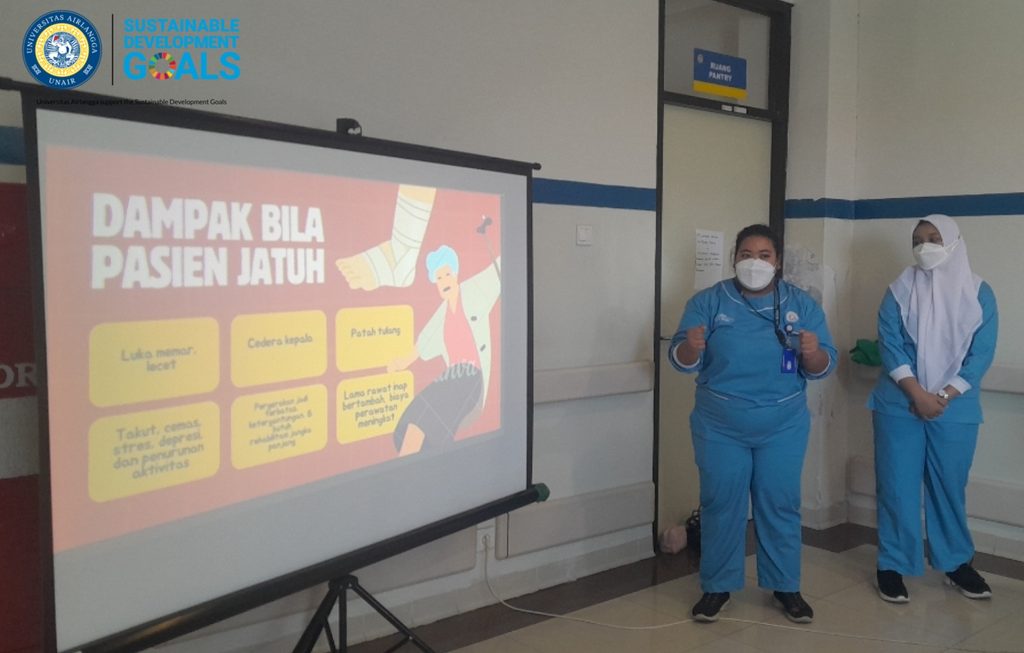
To help families remember the steps for preventing fall risks, the students introduced the “SIAGA” method as a key message in the education. S stands for selalu memberi tahu perawat (always inform the nurse) about any history of falls experienced by the patient; I stands for identifikasi potensi bahaya (identify potential hazards) or fall risks in the patient’s surroundings; A stands for amankan lantai (secure the floor) from slippery conditions and obstacles that could cause the patient to trip; G stands for ganti posisi perabotan (rearrange furniture and patients’ belongings) so that they are easily accessible; and the second A stands for ajak pasien berdiskusi (discuss with the patient) how to move and transfer safely.
In addition to delivering the educational material, students demonstrated simple measures that families can take in the care environment, such as using bed rails, locking the wheels of the patient’s bed, and assisting patients during mobilization, including when going to the bathroom. Families were also educated about conditions that should be immediately reported to healthcare workers, such as sudden behavioral changes, increasing weakness or restlessness, dizziness, or impaired balance. If a patient experiences a fall, families are advised to remain calm, avoid immediately lifting or moving the patient, promptly call a nurse or healthcare worker, observe the patient’s condition, and follow the healthcare professional’s instructions to prevent more serious injuries.
At the end of the activity, students conducted a simple evaluation to assess the participants’ level of understanding. The evaluation results showed that participants were able to identify factors that increase fall risk, explain preventive measures using the “SIAGA” method, and describe the appropriate actions to take if a patient experiences a fall. Throughout the activity, participants demonstrated attentiveness and enthusiasm toward the material presented. The discussion and question-and-answer session also provided an opportunity for families to ask questions and share their experiences while accompanying patients in the care environment.
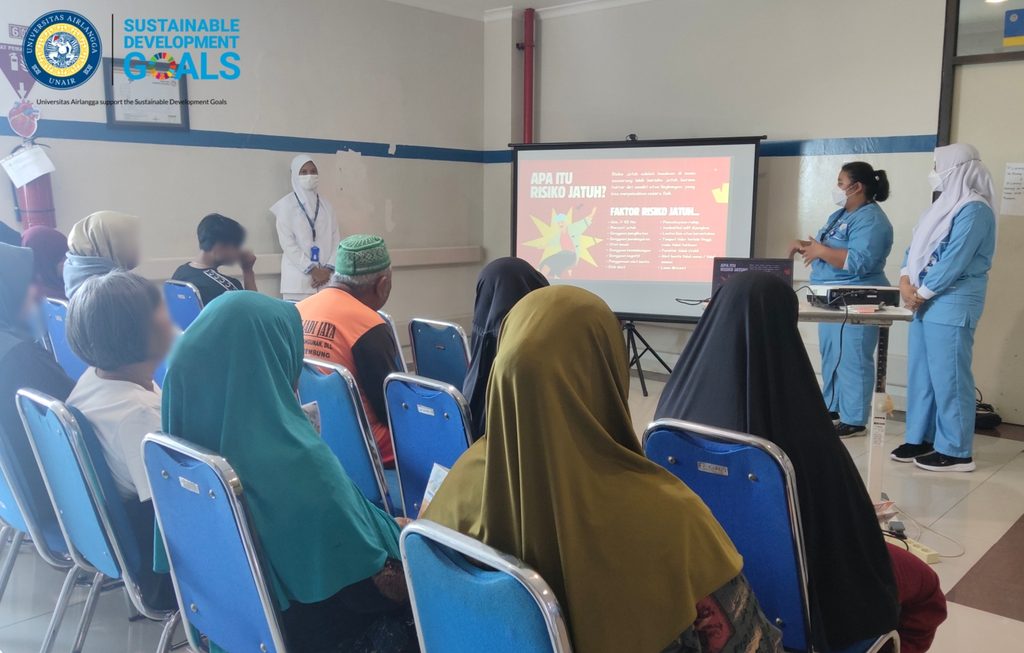
This PKRS activity served as one form of implementing the competencies of Ners Professional students at Faculty of Nursing Unair in providing professional health education. The activity also provided students with an opportunity to apply therapeutic communication skills, health promotion, patient and family education, and patient safety principles in a clinical environment. Through increased knowledge and active family involvement, the risk of falls and injuries among patients is expected to be minimized, thereby creating a safer care environment.
Education on fall risk prevention is related to several Sustainable Development Goals (SDGs), including:
- SDG 3: Good Health and Well-Being — through efforts to improve patient safety, prevent fall-related injuries, and support the provision of safe and high-quality healthcare services.
- SDG 4: Quality Education — through the provision of health education to patients and families and the application of Ners Professional students’ competencies in health education and promotion.
The implementation of PKRS on fall risk prevention represents a concrete step toward increasing family awareness as part of the patient care team. Appropriate knowledge, active family involvement, and collaboration with healthcare professionals are expected to create a safer care environment and reduce the risk of falls among hospitalized patients. This activity also reflects the commitment of the Faculty of Nursing, Universitas Airlangga, to integrating professional education with healthcare services oriented toward patient safety and patient needs.
Writer: Prayudya Alqaira An Najwa