Surabaya – In an effort to increase awareness regarding the importance of fulfilling balanced nutrition from an early age, students of the Faculty of Nursing, Universitas Airlangga (UNAIR), organized a health education activity titled “Fulfilling Nutrition Needs in School-Age Children through the Introduction of the Isi Piringku Concept” at SD Muhammadiyah 8 Surabaya on Wednesday, October 21, 2026.
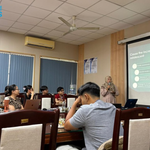
This activity was part of the integrated Project-Based Learning (PJBL) implementation by Group 1 Class A1 Class of 2025 in the Health Promotion and Basic Needs Fulfillment course. Guided by advisory lecturers Ira Suarilah, S.Kp., M.Sc., Ph.D., Wahyuni Tri Lestari, S.Kep., Ns., M.Kep., and Dr. Joni Haryanto, S.Kp., M.Si., students were directed to design health promotion activities tailored to the target audience’s characteristics, ranging from material preparation and visual props to field execution.
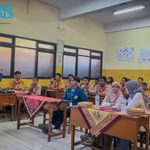
The main target audience comprised 41 5th-grade students from three classes: Ar-Rozzaq (16 students), Al-Hafizh (16 students), and Al-Ghofur (9 students). The goal was to enhance understanding of the importance of fulfilling balanced nutrition to support children’s daily growth, development, and activities.
Selecting elementary school students as the target audience was based on the importance of cultivating healthy eating habits early in life. During the growth phase, children require sufficient and balanced nutritional intake. A lack of understanding regarding food choices and nutritional composition can affect eating habits and increase the risk of various nutritional issues.
Introducing Balanced Nutrition through Interactive Education
During implementation, Universitas Airlangga students delivered materials covering the definition of nutrition, benefits of proper nutrition for children, impacts of nutritional deficiencies, and the introduction of the “Isi Piringku” (My Plate) concept as a simple guide for preparing balanced meals.
The “Isi Piringku” concept was introduced through four main food groups: staple foods, side dishes, vegetables, and fruits. Students were also given an understanding of portion division on a single plate: half of the plate consisting of vegetables and fruits, while the other half consists of staple foods and side dishes.
To make the material easier to comprehend and remember, the education was packaged interactively through audiovisual presentations, ice-breaking activities, educational games, and singing the “Isi Piringku” song.
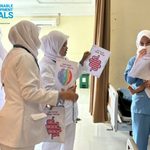
In addition to receiving theoretical material, students actively participated in a breakfast or school lunch menu assembly game using banner media and visual props. Through this activity, students learned to recognize various food types while practicing menu composition aligned with balanced nutrition principles.
This active participation approach is expected to create a fun learning environment while helping children realize that healthy eating does not have to be difficult to apply in daily life.
Tangible Contribution to SDG Achievement
This educational activity also represents a tangible contribution by Universitas Airlangga toward supporting the Sustainable Development Goals (SDGs), particularly SDG 2: Zero Hunger and SDG 3: Good Health and Well-Being.
The link to SDG 2 is realized by increasing children’s understanding of the importance of fulfilling nutritious and quality food needs. Meanwhile, support for SDG 3 is demonstrated through promotional and preventive health efforts, specifically in building awareness of healthy eating patterns and balanced nutrition starting from school age.
Through this education, students strived to instill the understanding that nutritional fulfillment is not merely an act of eating to satisfy hunger, but a fundamental need that plays a vital role in maintaining health and supporting optimal child growth and development.
The Role of Teachers in Supporting Healthy Eating Habits
The successful formation of healthy eating habits in children naturally relies on support from their surrounding environment, particularly family and school. Teachers hold an essential role in reminding and reinforcing students’ understanding of choosing nutritious foods daily.
“InsyaAllah, the PJBL program carried out at SD Muhammadiyah 8 yesterday is very relevant to our school’s existing programs. Indeed, here at SD Muhammadiyah 8, we are currently actively planning programs focused on nutritious food, especially healthy packed lunches. Our goal is to reduce children from buying unhealthy or unhygienic snacks, while also minimizing their consumption of snacks that lack adequate nutritional value,” stated Mr. Ummar, Head of Public Relations at SD Muhammadiyah 8 Surabaya, regarding the implementation of the PJBL activity.
Through teacher involvement as educational partners, messages about the importance of balanced nutrition are expected to extend beyond the event, remaining continuously reinforced and applied both at school and home.
Students as Community Health Promotion Agents
Beyond benefiting the elementary students, this initiative served as a real-world learning space for Faculty of Nursing Universitas Airlangga students to apply nursing knowledge directly within the community. Group 1 Class A1 Class of 2025 not only practiced delivering health education, but also honed their communication skills, teamwork, creativity in designing learning media, and ability to interact with school-age children. The challenge of communicating nutrition concepts simply, engagingly, and accessibly for children became a valuable experience for the students.
This “Isi Piringku” program serves as a practical step toward building awareness that healthy eating habits must be cultivated early. With proper knowledge and continuous support from teachers and parents, children are expected to adopt balanced nutritional habits as part of a healthy lifestyle.
Through collaboration between higher education institutions and schools, Universitas Airlangga continues to drive the practical application of academic knowledge to deliver tangible benefits to society while supporting the emergence of a healthier, higher-quality, and more prosperous generation.
Writer: Claudya Putri Rachma Zakaria