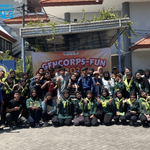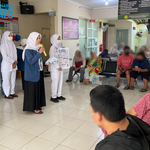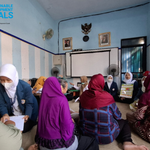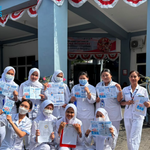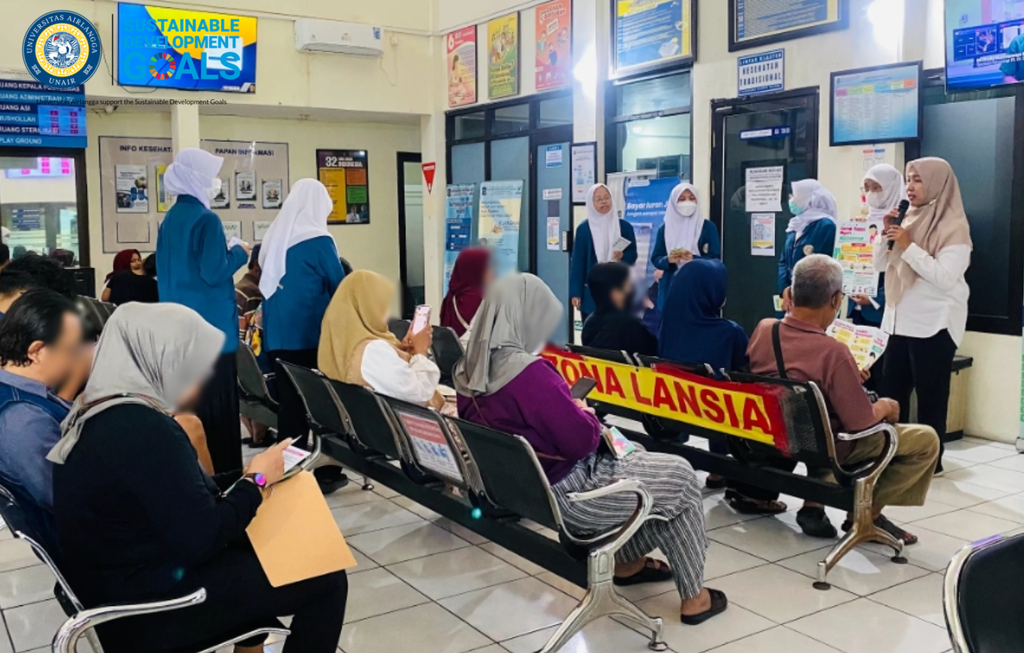
NERS NEWS — On Wednesday, 16 September 2026, students from the Nursing Profession Program, Faculty of Nursing, Universitas Airlangga, through Group 3, conducted a health education activity titled “Move Without Pain: Tips for Preventing and Managing Back Pain Independently” at Klampis Ngasem Public Health Center, Surabaya. This activity is part of community and family nursing practice, targeting patients and their families visiting the health center.
The educational session began at 09:00 WIB and continued until completion. The program aimed to improve public knowledge and awareness about safe and effective ways to prevent and manage back pain at home. Materials covered included the definition of back pain, its causes and risk factors, prevention strategies, self-management at home, simple physical exercises, and warning signs that require medical attention.
In delivering the material, students explained that back pain may present as soreness, stiffness, a pulling sensation, or aching that interferes with daily activities. Contributing factors include poor posture, improper lifting techniques, lack of physical activity, excessive exercise or sudden movements, excess body weight, aging, and certain medical conditions.
Participants were also taught simple steps to maintain a healthy back. Students advised maintaining good posture, avoiding prolonged sitting, engaging in regular physical activity, using proper lifting and carrying techniques, avoiding overly heavy loads, maintaining a healthy weight, and stretching after long periods of sitting or activity.
Beyond prevention, participants were introduced to practical home management approaches: staying active, getting adequate rest without prolonged bed rest, gentle stretching, applying warm or cold compresses, and avoiding activities that worsen pain. Students also emphasized the importance of consulting a healthcare provider if pain persists or worsens.
The session included demonstrations of simple exercises, such as walking, pelvic tilts, knee-to-chest stretches, cat-cow stretches, and gentle movements. Participants were reminded to exercise slowly within their capacity and to stop if pain intensifies or if tingling, numbness, or weakness occurs in the legs.
Education also covered ergonomic posture in daily life. Examples were provided for sitting, standing, lifting, working at a desk or computer, and sleeping positions that help reduce strain on the back. Adopting these habits is expected to help people better care for their spinal health in daily life.
The program used lectures, discussions, and demonstrations supported by leaflets and posters. The flow included an opening, presentation of materials, question-and-answer and comprehension evaluation, and closing. Participants are expected to retain and independently apply the tips for preventing and managing back pain while respecting their individual conditions and capabilities.
1Overall, the “Move Without Pain” program serves as a health education initiative empowering patients and families to protect their back health through knowledge and preventive action. The session emphasized that persistent, worsening pain, or symptoms such as numbness, tingling, leg weakness, or bladder and bowel changes, require further evaluation by a healthcare professional.
Writer: Nayla Aisyah